

Introduction
Class 9 Science is a big deal. The topics you cover this year lay the groundwork for your Class 10 board exams. They also set the stage for competitive exams like JEE and NEET down the road. It is easy to feel lost with so many study resources around.

But the best path forward is simple. Your ncert science text book class 9 is the only resource you need to master first. It follows the official CBSE curriculum for the 2026 academic year, which outlines exactly what you need to learn.
Every diagram and exercise in your ncert book for class 9 science is there for a reason.
The challenge for most students is knowing where to focus. This guide breaks down the chapter wise weightage so you can plan your time wisely.

It gives you a clear roadmap for your science 9 class ncert book.
Our goal is to help you turn your 9th class ncert science book into your strongest study tool. With the right strategy, you can build a solid foundation in science that will help you for years.
Once you understand the basic principles of physics and biology, you will see them applied in creative ways everywhere. It makes reading hard sci-fi novels much more interesting when you know the real science behind the story. You can explore some great examples of this on Good SF Books.
The Official NCERT Class 9 Science Textbook: Structure and Importance
Your ncert science text book class 9 is your single most important study tool. It is not just another book on your shelf. It is the official guide created by subject experts to match the CBSE syllabus exactly. The CBSE curriculum document for the 2026 academic year shows that every topic in your ncert book for class 9 science is chosen with care.
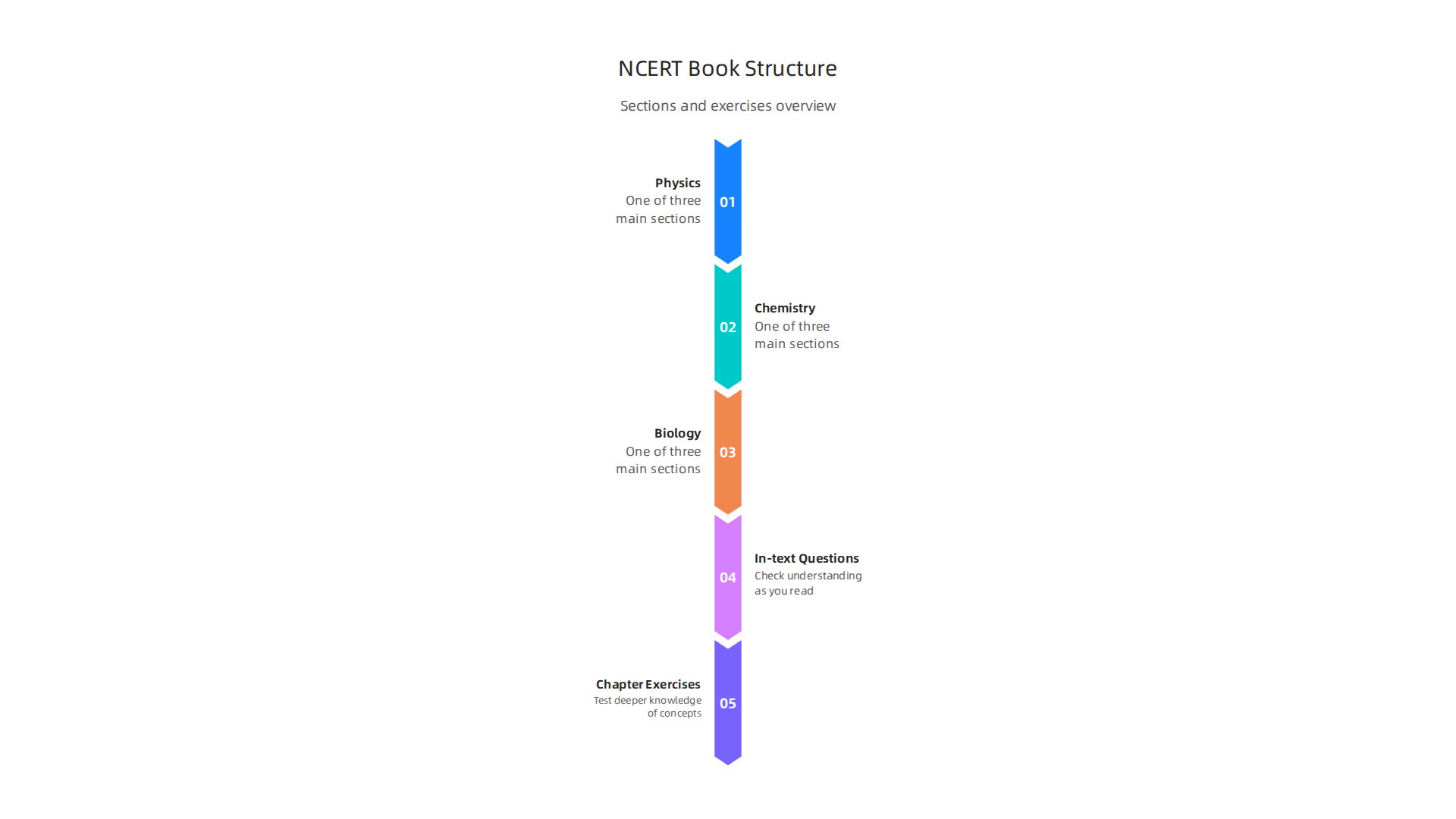
So what makes this textbook special? It follows a smart design. The chapters are grouped into three main sections Physics, Chemistry, and Biology. Inside each chapter you will find in text questions that help you check your understanding as you read. At the end of each chapter there are exercises that test your deeper knowledge.
This structure is not random. It builds concepts step by step. For example, you first learn about motion, then force, then gravitation. Each idea connects to the next.
The chapter wise weightage guide shows that some chapters carry more marks in exams. But do not skip any. The ncert book science class 9 is designed to give you a complete foundation. Every page matters.
Understanding the structure of your science 9 class ncert book is the first step to studying smart. When you know where the questions come from and how the topics repeat with more depth, you can plan your time better. This approach will help you in Class 10 and beyond.
The concepts you learn from your 9th class ncert science book are not just for exams. They explain how the world works. For example, the laws of motion you study are the same ones that make science fiction stories feel real. If you enjoy seeing science in action, you can explore hard sci-fi novels that respect real physics to see these ideas come alive.
Decoding the CBSE Syllabus and Chapter Weightage
Now that you understand the structure of your ncert science text book class 9, it is time to get strategic. Not all chapters are equal in the exam. Knowing which ones carry the most marks helps you use your study time wisely. The CBSE syllabus divides your ncert book for class 9 science into three main sections: Physics, Chemistry, and Biology. Each section carries similar weight in the final exam. But within those sections, some chapters appear more often in question papers.
According to the CBSE Class 9 Science chapter wise weightage guide, chapters like Motion, Force and Laws of Motion, and The Fundamental Unit of Life are high value topics. They often show up in multiple choice questions, short answers, and long form questions. The CBSE marking scheme for 2025-26 confirms that chapters from the "Motion, Force and Work" unit alone can contribute a significant portion of your total marks.

Meanwhile, the updated CBSE syllabus for 2026-27 keeps these core topics consistent year after year.
So how do you use this information? Start with your 9th class ncert science book. Mark the chapters that have the highest weightage. Study those first, but do not skip the rest.

Remember, the ncert book science class 9 builds a foundation. Every chapter connects. If you master the high weightage chapters, you will also understand the smaller ones better. And once you see how real physics explains the world, you might enjoy exploring gateway science fiction books for young readers that bring these concepts to life.
Focus your energy where it counts. The science 9 class ncert book is your road map. Use the weightage as your compass.
Must-Have Supplementary Books: NCERT Exemplar and Top Reference Texts
Your ncert science text book class 9 is the foundation, but adding the right supplementary books can take your understanding deeper. Think of them as your training weights. They prepare you for tougher questions.
The first book you need is the NCERT Exemplar. This official companion from NCERT itself is packed with advanced problems. It does not repeat your ncert book for class 9 science. Instead, it pushes you to apply concepts in new ways. According to experts, it sharpens problem solving skills and exposes you to competitive style questions 1.
After the Exemplar, a few reference texts stand out. Books like S. Chand, Lakhmir Singh, and MTG are widely recommended 2. They offer clear explanations and plenty of practice questions. The best part? They follow the ncert book science class 9 syllabus closely. So you are never learning something off topic.
Here is the catch. Do not buy everything you see. Using too many resources at once confuses you. Stick to one good reference per subject. Master your science 9 class ncert book first. Then use your chosen reference to practice harder problems. This keeps your study time focused and effective.
Your 9th class ncert science book gives you the core ideas. Your supplementary books help you apply them. Used together, they build a strong base for future science. And if you want to see how real physics plays out in thrilling stories, explore some hard sci-fi novels that respect real physics and tell gripping stories.
Master the core. Then stretch yourself with the right extras.
Top Free Online Resources for NCERT Science (DIKSHA, YouTube, and More)
Your ncert science text book class 9 gives you the theory. But sometimes you need a different voice to explain the same idea. That is where free online resources shine. They break down concepts in fresh ways without costing you a rupee.
The best place to start is DIKSHA, the government’s official learning platform.
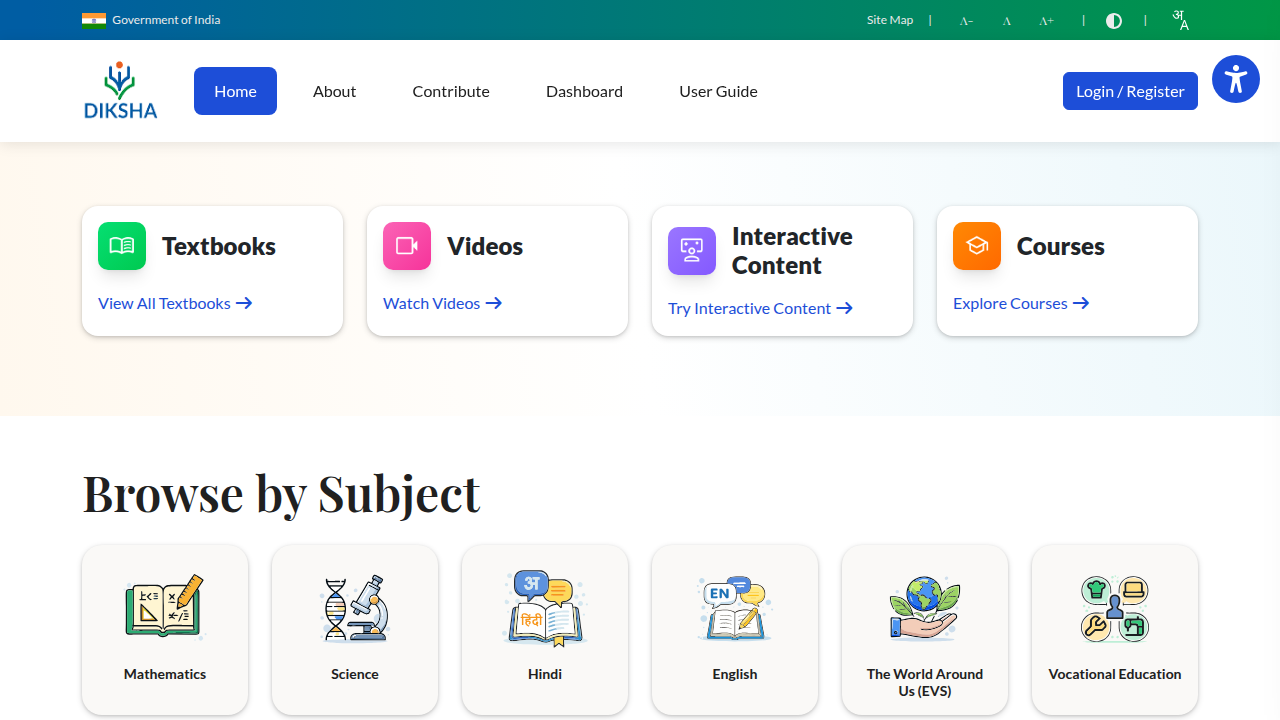
It offers videos, quizzes, and practice tests that align perfectly with your ncert book for class 9 science. Every piece of content is checked by experts. So you know it is reliable.
Next come YouTube channels. Channels like Manocha Academy, Physics Wallah, and Vedantu are excellent for tricky topics. When a diagram in your ncert book science class 9 feels confusing, a short video can make it click. Many teachers on these channels have helped millions of students understand physics, chemistry, and biology.
You also need to test yourself. Free platforms like Khan Academy and Toppr offer online quizzes for every chapter in your science 9 class ncert book. These tests show you where you are strong and where you need more work. According to educational experts, consistent self-assessment is key to mastering any subject 4.
Here is a simple plan. Use your 9th class ncert science book to learn the core. Watch a video when a concept feels hard. Then take a quiz to lock it in.
And once you feel confident with science, you might enjoy seeing how real physics plays out in fiction. Check out these stories built on real scientific knowledge for fun reading.
Building an Effective Study Plan Using the NCERT Textbook
Feeling lost in your ncert science text book class 9? You are not alone. The syllabus covers physics, chemistry, and biology. A smart study plan helps you cover everything without stress.

Try a 3 month plan. Break it into months. In month one, cover all chapters once. Month two is for deep revision and practice. Month three is for mock tests and final review.
Each day, study one science branch. Alternate them. For example, physics on Monday, chemistry on Tuesday, biology on Wednesday. This keeps your brain fresh. According to toppers, using your ncert book for class 9 science thoroughly builds the strongest base 1. Make notes as you read. Revise those notes every week 2.
Do not skip weekly mock tests. They show you where you stand. Aim for at least one test per week. Also, redo the NCERT exercises at the end of each chapter. Mastering these questions is crucial because most exams draw directly from them 3. Daily revision is compulsory, not optional 4.
Stick to your ncert book science class 9 as your main guide. Use the free online resources from the previous section only when you need extra help. And once you finish a chapter, reward yourself. Those hard sci-fi novels that respect real physics can make science even more exciting.
Active Learning Techniques for Science: Diagrams, Experiments, and MCQs
Now that you have a solid study plan, it is time to make your learning active. Simply reading your ncert book for class 9 science is not enough. Try these three proven techniques.
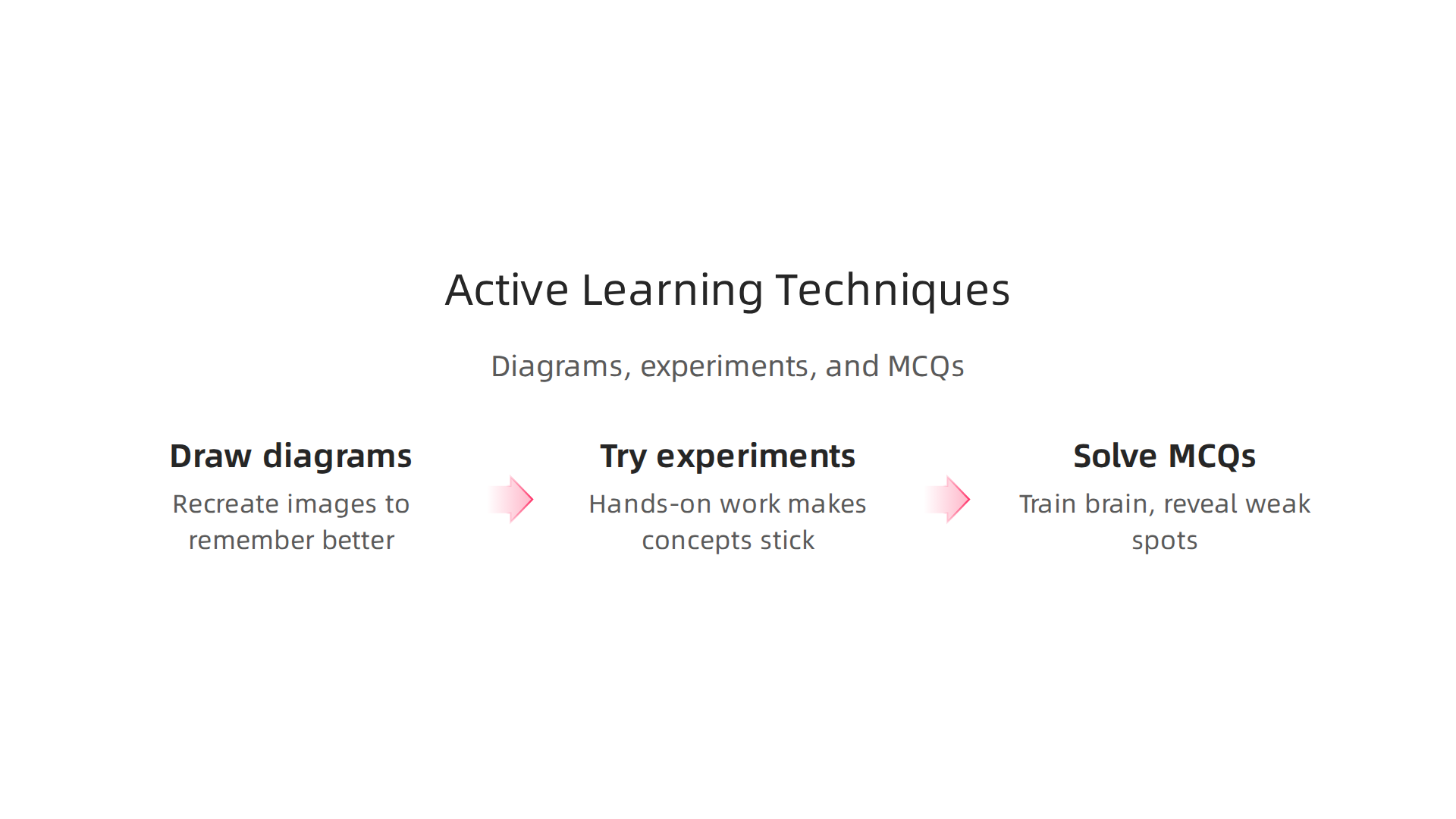
Draw diagrams by hand. When you draw the animal cell, the human eye, or the structure of an atom, you remember it better. Your brain works harder to recreate the image. According to CBSE experts, practicing diagrams, formulas, and definitions regularly is a key part of acing science CBSE Class 9 Study Tips. So grab a pencil and label everything.
Try simple experiments at home. You do not need a lab. Use kitchen vinegar and baking soda to show chemical reactions. Use a glass of water and a pencil to understand refraction. Hands-on work makes the concepts stick. It turns your science 9 class ncert book into real life.
Solve MCQs daily. Buy a copy of NCERT Exemplar or use free past papers online. MCQs train your brain to think fast and choose correct answers. They also reveal weak spots. Top performers recommend developing analytical skills by solving difficult problems How to Become a Topper. Aim for 10 to 15 MCQs each day.
Once you master these techniques, reward yourself with a good book. If you enjoy science, try hard sci-fi novels that respect real physics. They make the subject even more fun.
Common Mistakes Students Make When Studying NCERT Science
Even with the best active learning techniques, many students trip up on simple errors. Here are the most common ones to watch out for when using your ncert science text book class 9.
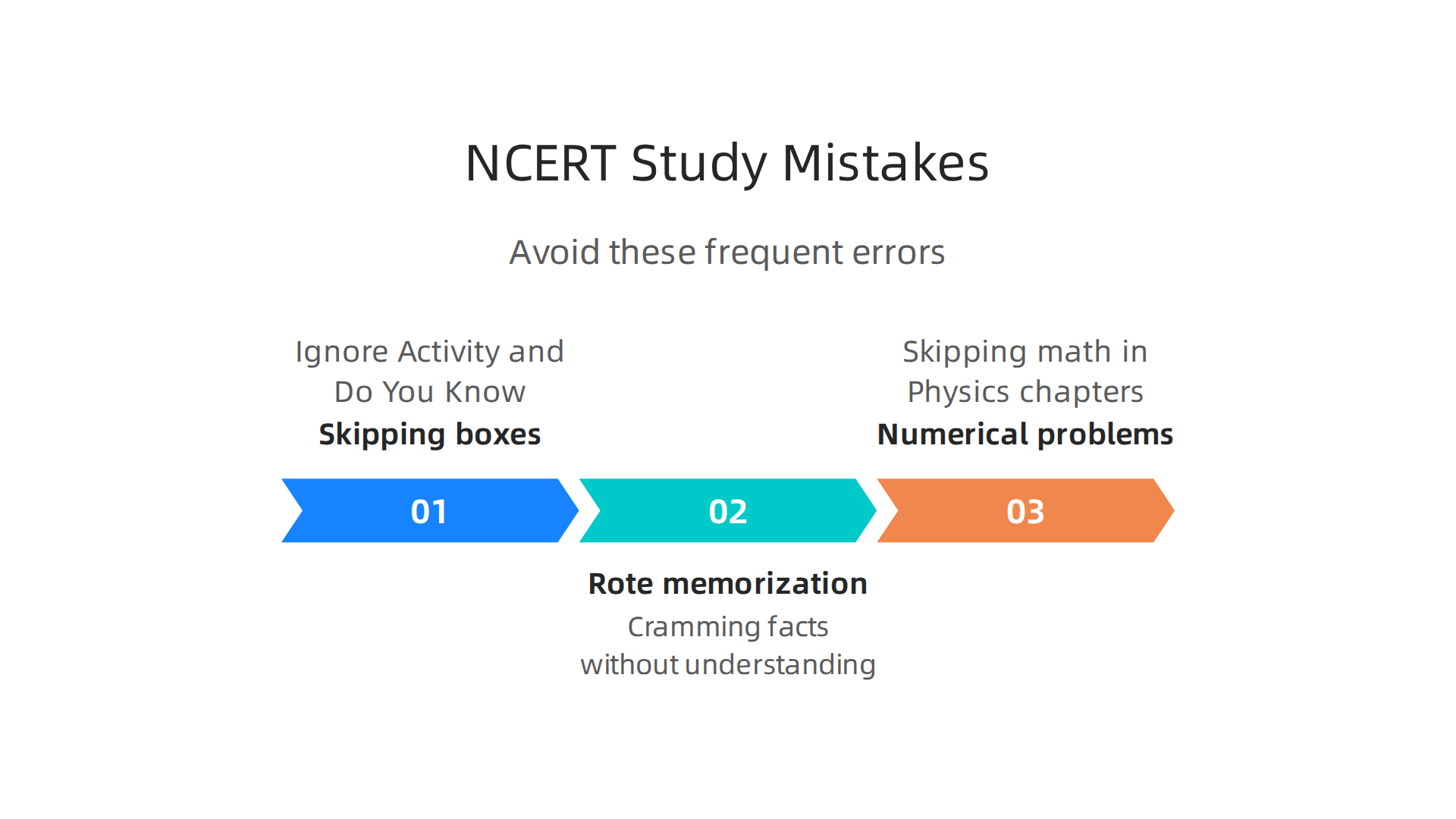
Skipping the ‘Activity’ and ‘Do You Know?’ boxes. These sections are not just fillers. They test your ability to apply concepts. Ignoring them hurts your performance in application-based questions, as experts in CBSE preparation point out Top 7 Mistakes Students Make in CBSE Board Preparation.
Relying only on rote memorization. Your ncert book for class 9 science is designed to build understanding. Cramming facts without understanding leads to poor marks in analytical questions. A common error is passive reading of the ncert book science class 9 without engaging with the content.
Neglecting numerical problems. In Physics chapters like Motion and Sound, many students skip the math. That is a big mistake. Regular practice of numericals is critical to mastering the science 9 class ncert book. According to research, not practicing enough is one of the top mistakes students make The 10 most common mistakes students make.
Avoid these pitfalls, and your learning will become much smoother. If you want to make science even more exciting, try some fun science fiction books for young readers like the Goosebumps series. They can spark your imagination and make you love science even more.
How to Avoid Rote Memorization and Build Deep Concepts
So how do you stop just memorizing facts and start truly understanding your ncert science text book class 9? It takes a small shift in your study habits.
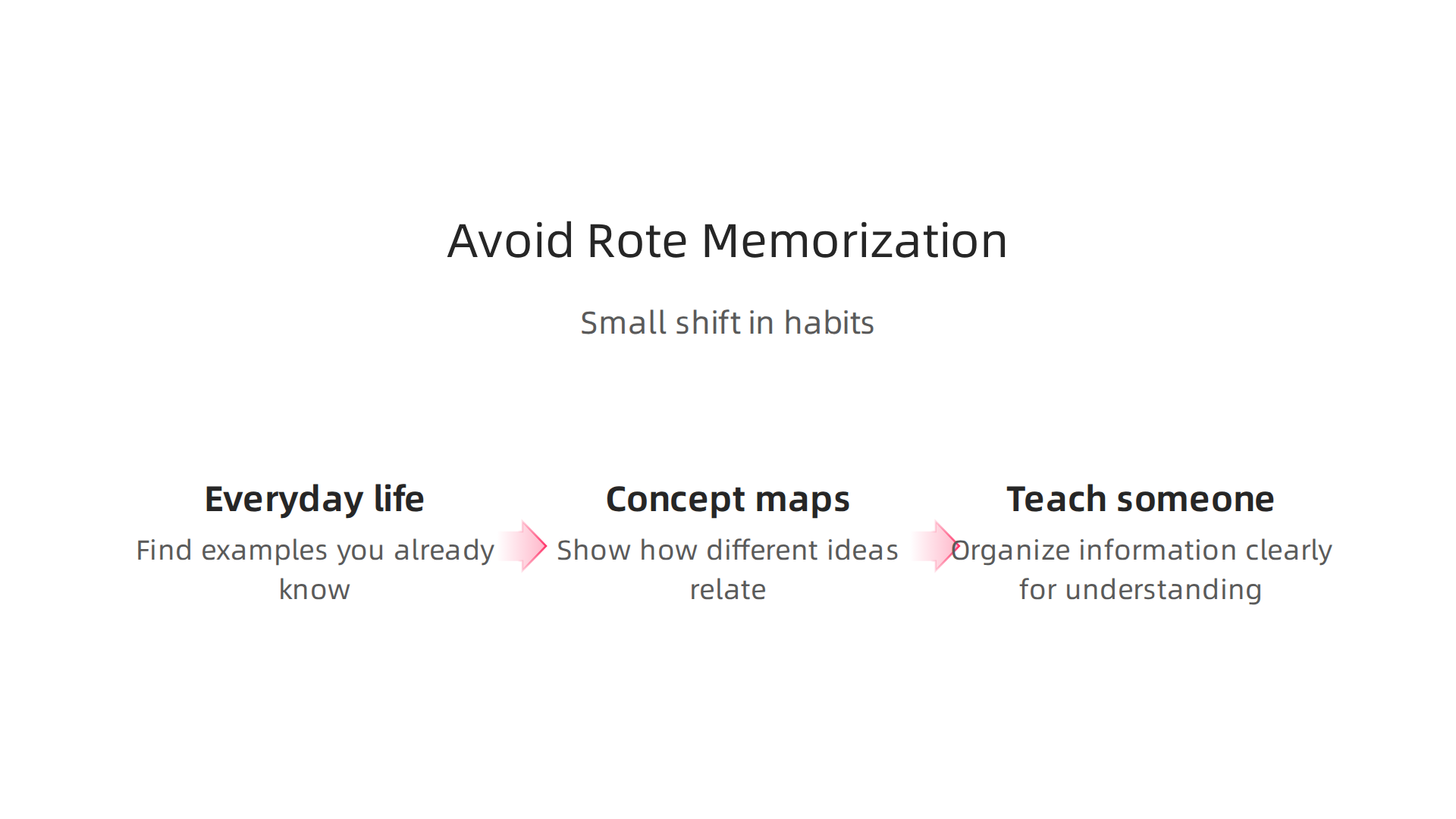
Here are three simple strategies that work.
Connect science to your everyday life. When you read a chapter, look for examples you already know. For instance, think about inertia the next time you are in a car that suddenly stops. Your body lurches forward. That is Newton’s first law in action. Diffusion? Just think about the smell of cooking spreading through your kitchen. These mental links turn abstract ideas into something you can actually feel. If you enjoy seeing science in action, you might like hard sci-fi novels that respect real physics – they make learning even more fun.
Use concept maps to connect the dots. A concept map is a simple drawing that shows how different ideas relate. Write the main topic in the center, then draw lines to subtopics, definitions, and examples. This helps you see the big picture instead of a list of random facts. It is a lot more effective than just rereading your notes, which experts say is one of the most common mistakes students make The 10 most common mistakes students make.
Teach someone else. Find a friend, a sibling, or even your parents. Explain a concept from your ncert book for class 9 science in your own words. If you stumble, you know where you need to study more. Teaching forces your brain to organize information clearly. It is one of the fastest ways to turn shallow memorization into deep understanding.
Try these techniques with your science 9 class ncert book this week. You will notice the difference.
Exam Preparation Strategies Using NCERT for SA1, SA2, and Olympiads
Now that you know how to build deep concepts, let’s turn that understanding into exam success.

The key is to use your ncert science text book class 9 the right way for different types of exams.
For school exams (SA1 and SA2), stick close to the NCERT. Most questions come straight from the textbook. So work through all the in-text questions, exercises, and back-of-chapter questions. Practice diagrams, formulas, and definitions regularly. This is a proven method to build a strong base, according to CBSE class 9 study tips from PW Store. Also review important questions for class 9 from Vedantu to spot repeated patterns.
For NTSE and Science Olympiads, you need to go deeper. Start by mastering the same NCERT basics. Then solve NCERT Exemplar problems and previous year papers. These exams test your ability to apply concepts, not just recall them. If you enjoy seeing science in action outside the classroom, check out hard sci-fi novels that respect real physics – they show how principles from your ncert book for class 9 science show up in imaginative stories.
Time management matters too. A good rule is to spend 70% of your study time on NCERT basics – that means reading your science 9 class ncert book, solving questions, and revising. Use the remaining 30% on application questions, including Olympiad-style problems. This balanced approach works for both school exams and competitive tests.
With these strategies, your 9th class ncert science book becomes more than a textbook. It becomes your roadmap to high scores and deeper understanding.
Expert Tips from Teachers and Toppers on Mastering NCERT Science
You have the strategy. Now let’s hear what the people who actually score high do with their ncert science text book class 9.
Teachers agree on one simple rule: read your textbook three times. First, read for understanding. Go slow. Highlight key ideas. Second, read for revision. Focus on diagrams, formulas, and definitions. Third, read for practice. Solve every single question at the end of each chapter. According to CBSE class 9 study tips from PW Store, this three-step method builds a rock-solid foundation.
Toppers follow a few smart habits too. They always write answers in full sentences, not just keywords. Why? Because examiners look for complete explanations, not bullet points. They also make it a point to solve every back exercise in their ncert book for class 9 science at least twice. You can find important questions for class 9 from Vedantu to spot which problems appear most often.
Here is the biggest secret to avoiding panic before exams. Revise old chapters every week. Do not wait until the night before. Spend 15 minutes each day reviewing what you studied last week. This keeps everything fresh in your mind. Your science 9 class ncert book becomes familiar instead of scary.
Building these habits early turns your 9th class ncert science book into a tool you truly own. And if you enjoy stories that make science come alive, you might also like Goosebumps books that spark curiosity in young readers. They show how science themes sneak into fun adventures.
Summary
This guide explains how to use the NCERT Class 9 Science textbook as your primary study tool and gives a clear roadmap to mastering the CBSE syllabus. It covers the book’s structure (physics, chemistry, biology), chapter-wise weightage to prioritise study time, and which chapters typically carry more marks. The article recommends must-have supplements—starting with the NCERT Exemplar and one good reference book—while warning against using too many resources. It lists the best free online platforms and YouTube channels, offers a simple 3-month study plan, and describes active learning techniques like drawing diagrams, doing home experiments, and daily MCQs. You’ll also find common mistakes to avoid, ways to convert rote learning into deep understanding, exam-focused strategies for school tests and Olympiads, plus practical tips from teachers and toppers to improve recall and scores.