

Why compare Mortal Engines and The Road? A reader-first guide
Have you ever wondered what happens when two very different stories about a ruined future are put side by side? It might seem strange to compare Mortal Engines, a grand adventure with moving cities, to The Road, a quiet and very sad tale of a father and son. But both books offer a powerful look at what the world might be like after everything falls apart, making them two of the best dystopian books available today.

The Mortal Engines book plunges you into a steampunk world where giant cities roll across the land, swallowing smaller towns. It is a young adult (YA) adventure full of exciting chases, brave heroes, and big mysteries. It has a sense of wonder and excitement, even with its serious themes. On the other hand, The Road book is a much darker and more serious story. It follows a man and his son through a burned-out world, focusing on their struggle to survive and keep hope alive. Literary critics have even explored the distinct "Styles of Extinction: Cormac McCarthy’s The Road" in their analysis of the novel’s bleak outlook.
So, why put these two stories together? This guide is for readers like you who love science fiction and want to think deeper about the books you read. We’ll give you clear information and different ways to look at these tales. We will compare their main ideas, the feelings they bring out, and the unique worlds they build. You will see how different authors can explore similar ideas about survival, hope, and what it means to be human in a broken world. By the end, you will not only understand these two important stories better, but you will also find trusted suggestions for your next great read in the world of science fiction.

Publication & Author Context: Philip Reeve’s Mortal Engines vs Cormac McCarthy’s The Road
When we read books, knowing a little about who wrote them and when can help us understand them better. This is especially true for the Mortal Engines book and The Road book. These two stories come from very different places, which makes comparing them even more interesting.
Let’s start with the Mortal Engines book. It was written by Philip Reeve and first came out in 2001. This story is the first part of a bigger set of books called the "Mortal Engines Quartet." Philip Reeve is a writer who is well-known for creating exciting adventures, often for younger readers. His books are usually for young adults, or "YA" readers, which means teens and those who enjoy fast-paced, imaginative stories. Because of this, when you pick up the Mortal Engines book, you expect a world full of wonder, daring heroes, and big battles, even if the world itself is in danger. It is similar to other popular series like Hunger Games books that young readers love.
Now, let’s look at The Road book. This powerful story was written by Cormac McCarthy and was first published in 2006. Unlike Mortal Engines, The Road is a standalone novel, meaning it’s a complete story in one book, not part of a series. Cormac McCarthy is a very respected writer, known for his serious and often stark stories for adult readers. His books often win big awards, like the Pulitzer Prize, and literary experts study his work, exploring themes like the Styles of Extinction: Cormac McCarthy’s The Road in their discussions.
Because of McCarthy’s background, readers know that The Road will be a deep, thoughtful, and sometimes tough read. It focuses more on feelings and hard truths about survival than on grand adventures.
So, you can see how the authors’ backgrounds and when their books came out set up different kinds of journeys for the reader.
Philip Reeve’s Mortal Engines book invites you into a thrilling, steampunk world for a fun adventure. Cormac McCarthy’s The Road book, on the other hand, calls you to think deeply about human endurance and love in a very broken world. Both are amazing in their own ways, but knowing their origins helps us appreciate their different styles even more.
When you dive into a story, the way its world works and how it makes you feel are super important. The Mortal Engines book and The Road book offer very different kinds of worlds and feelings, even though both are set after big changes to Earth.
Let’s start with the world of the Mortal Engines book. Imagine cities that move! That’s right, giant cities on wheels, gears, and tracks that roll across the land, hunting smaller towns to "eat" them for parts and resources. This idea is called "Municipal Darwinism," and it means only the strongest cities survive. The main character, Tom, lives in London, a huge traction city. The world outside these cities is called the "Great Hunting Ground," which is full of dangers and hidden secrets. The setting is very imaginative, with a lot of strange machines and steampunk flair. The overall feel of the Mortal Engines book is exciting and full of adventure. It’s about young heroes fighting against a wild system, often with a sense of wonder, even when things are tough. You feel like you’re on a grand journey, full of chases and discoveries.
Now, let’s turn to The Road book. This story’s world is a stark contrast. It takes place on a ruined Earth, covered in ash after some unknown disaster. The sky is gray, most plants and animals are gone, and survival is a daily struggle. There are no fancy moving cities here, just a desolate landscape where a father and his young son walk, pushing a shopping cart with their few belongings. Their goal is simply to stay alive and find a safe place, moving south to escape the bitter cold. This is a classic example of a "refugee book" because the characters are constantly seeking safety and a better future in a broken world. The tone of The Road book is very serious and quiet. It’s about deep love between a father and son, and the hard choices people make when everything is lost. It makes you think about what it truly means to be human in the worst times. You can explore more about how the story shows big ideas about life after a world-changing event in discussions on McCarthy’s The Road and Ethical Choice in a Post-Apocalyptic World.
So, while the Mortal Engines book builds a complex, mechanical, and adventurous world, The Road book strips everything away to focus on raw survival in a silent, ash-filled land.
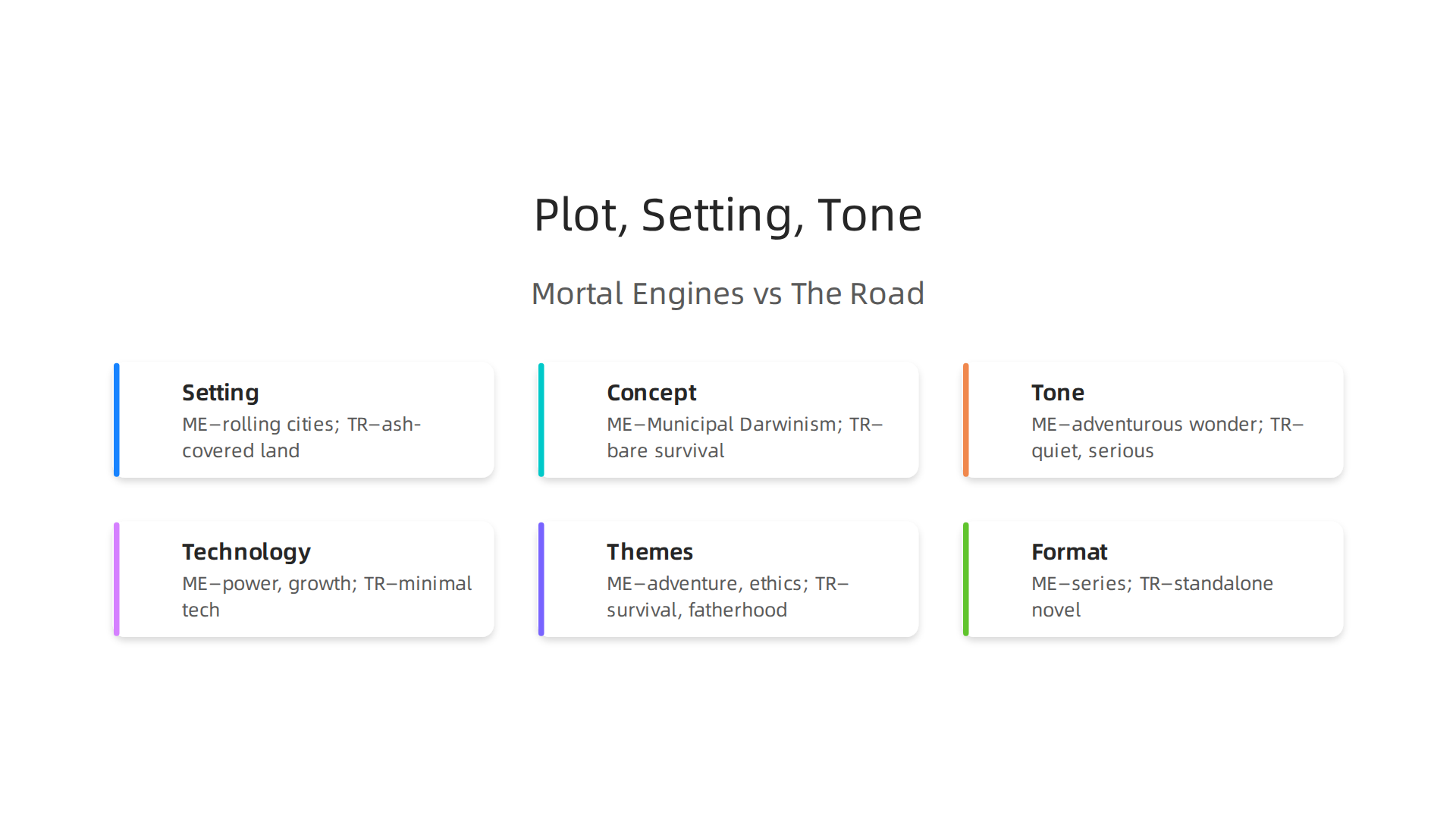
These big differences in setting and tone change what you expect as a reader. One is a thrilling ride, while the other is a deep look into the human spirit under extreme pressure. Both are great examples of dystopian books, but they tell their stories in completely different ways. If you’re interested in finding more powerful stories like these, you might enjoy discovering quality adult dystopian novels for thought-provoking reads.
Themes and Motifs: Technology, Survival, and Ethics
Beyond their different worlds, Mortal Engines book and The Road book also explore very different big ideas. These are called themes.
In the Mortal Engines book, a main theme is how people use technology. The moving cities are amazing machines, showing how smart humans can be. But this technology is also used to gobble up smaller cities, which brings up questions about power and what’s fair. The idea of "Municipal Darwinism" makes us wonder if bigger, stronger cities have the right to take from weaker ones. This book makes you think about how inventions can build great things but also cause a lot of harm, and if endless growth is really a good thing. It shows that sometimes, technology can make us forget what’s truly important.
Now, let’s look at The Road book. This story is all about survival and what it means to be human when almost everything is gone. There’s no fancy technology here, just a father and son trying to stay alive in a very broken world. The big themes are:
- Survival: Every day is a fight for food, warmth, and safety. This is a classic example of a refugee book, where people are always on the move, searching for a safe haven.
- Fatherhood: The deep love and protection the father feels for his son drives the whole story. It’s about keeping hope alive for someone else, even when you have none for yourself.
- Morality: In a world with no laws, people do terrible things to survive. But the father teaches his son to be "the good guys" and to carry the fire of kindness and hope. This raises tough questions about how we decide what’s right or wrong when there are no easy answers.

The book also touches on Environmental Degradation and its Metaphors in Cormac McCarthy’s "The Road", showing how a ruined world impacts human choices.
Both books also use special symbols. In the Mortal Engines book, the moving cities themselves are a symbol of greed and a future where resources are scarce. The ancient technology found in the "Great Hunting Ground" can symbolize forgotten wisdom or the dangers of past mistakes. In contrast, for The Road book, the road itself is a symbol of their never-ending journey and the hope of finding something better. The shopping cart they push is a symbol of their few belongings and the heavy burden of survival. Fire is a very strong symbol here too, representing warmth, life, and the spark of humanity they try to keep alive.
The settings in both books help explore these ethical questions. The fast-paced, "eat or be eaten" world of the mortal engines book makes us think about big groups of people and their leaders. The Road book‘s quiet, ash-filled world, on the other hand, puts a spotlight on a father and son’s personal choices and their deep bond. These different approaches make them both best dystopian books, showing how human stories can be told in many powerful ways.
When a book becomes very popular, people often want to see it come to life on the big screen. Both the Mortal Engines book and The Road book have been turned into movies, which changed how many people saw them.
How People Felt About the Books and Movies
Let’s start with the Mortal Engines book. Philip Reeve’s first book, Mortal Engines, was well-liked and kicked off a whole series. Readers enjoyed the new world of moving cities and the exciting adventure. Because the books were so popular, a movie was made in 2018. The film, also called Mortal Engines, brought the giant cities and sky battles to life with amazing special effects. You can even see the action in the MORTAL ENGINES – Official Trailer (Universal Pictures) HD.

However, the movie had a bit of a bumpy ride. While it got some praise for its visuals and even won a VES Award in 2019 for outstanding visual effects according to Mortal Engines (2018) – Awards – IMDb, critics gave it mixed reviews. Some felt that while the world looked great, the story was not as strong as it could have been. One review mentioned it had "so much potential" but might leave a "bad taste" for some viewers, as noted in a review from The Maroon. Some fans of the mortal engines book were also unhappy with changes made to characters, like Hester Shaw’s scar, which was toned down for the film, according to the Mortal Engines (film) fandom wiki.
Now, let’s talk about The Road book. Cormac McCarthy’s novel was highly praised. It even won the Pulitzer Prize for Fiction in 2007. People loved its powerful story about a father and son and the deep questions it asked about good and bad in a broken world. The book’s ideas about making ethical choices in a world after a disaster have been studied a lot, as shown in papers like McCarthy’s The Road and Ethical Choice in a Post-Apocalyptic World.
A movie version of The Road came out in 2009. Many people felt the film did a good job of showing the dark and emotional feel of the book. It starred Viggo Mortensen as the father, and he was praised for his acting. Unlike Mortal Engines, The Road movie was often seen as a faithful telling of the book’s difficult but important story.
Cultural Influence
Both the mortal engines book and the road book have left their mark on the world of storytelling. They show us different kinds of future worlds and ask us to think about what it means to be human when everything changes. Mortal Engines added to the steampunk genre, showing how old technology can be used in new, exciting ways, while The Road became a key example of how a very bleak future can still hold stories of hope and love. For readers who enjoy stories about worlds that have changed a lot, finding Discovering Quality Adult Dystopian Novels for Thought-Provoking Reads can lead to more great adventures.
Where They Sit in the Genre: Subgenres, Reader Expectations, and Teaching Uses
Both the mortal engines book and the road book are dystopian tales, meaning they show us scary or changed future worlds. But they fit into different kinds of these stories, which changes how readers feel about them and what they expect.
The mortal engines book is part of a type of science fiction called steampunk. Steampunk stories often mix old-fashioned things like steam power with futuristic inventions, giving them a unique look and feel. Think big, moving cities that run on giant engines! The Mortal Engines series is also great for young adult (YA) readers and those who love exciting adventure. When people pick up the mortal engines book, they usually expect a fast-paced story with lots of action, cool gadgets, and a grand journey in a wild, imaginative world. If you’re new to science fiction, this could be a great place to start, as it offers a fun and engaging entry into the genre, as noted in a Mortal Engines Book Review. For more information on this style, you can learn about the Introduction to Steampunk, examining three defining novels.
On the other hand, The Road book is a much more serious and literary kind of dystopian story. It’s known for being very bleak, meaning it shows a very sad and tough future. Readers of The Road expect a deep, emotional story about survival, human nature, and making hard choices when almost everything is gone. It’s not about exciting chases or cool technology, but about the quiet strength and sadness of a father and son. This makes The Road often discussed as one of the best dystopian books for those who enjoy powerful, thought-provoking stories.
Because they are so different, these books are used in different ways. The mortal engines book is a good choice for school classrooms looking at adventure stories or for book clubs that want something imaginative and exciting.

It’s also perfect for readers who like their stories with a sense of wonder and epic scale, perhaps even those who enjoy 10 series like Hunger Games books that will captivate you.
The Road book, however, is better for older students or book clubs that want to talk about deep topics like ethics, hope, and what it means to be human in extreme situations. It’s a powerful book that leaves a lasting impression, but it’s also quite heavy.
Both books show the wide range of stories you can find in the dystopian genre. Whether you like thrilling adventures or deep, emotional journeys, there’s a book for you. If you’ve enjoyed the serious thought of The Road or the wild adventure of the mortal engines book, you might also like to explore the lighter side of science fiction. Check out a fresh take on the genre: Add The Ridiculous to Your List.
Reader Guides, Discussion Questions, and What to Read Next
Once you’ve read a book, the fun doesn’t have to stop. You can think more about the story, talk about it with friends, or find new books just like it.

Here are some ideas for diving deeper into the mortal engines book and the road book, and what you might pick up next.
For the Mortal Engines Book
This thrilling adventure is full of big ideas and exciting moments. Here are some ways to think and talk about it:
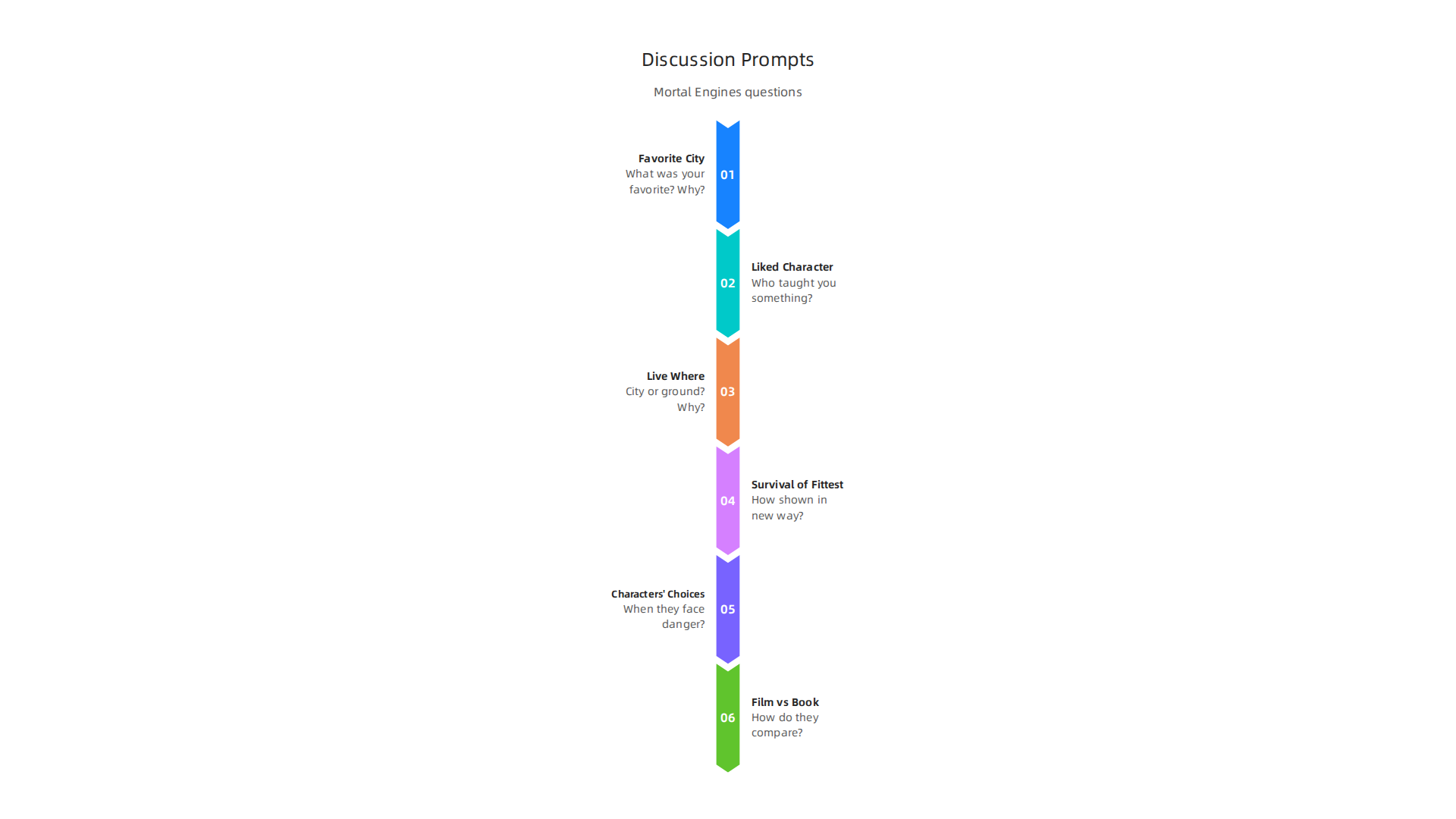
- Starter Questions:
- What was your favorite moving city and why?
- Which character did you like the most, and what did they teach you?
- If you lived in this world, would you rather be on a moving city or stay on the ground? Why?
- For Book Clubs or Deeper Talks:
- How does the book show the idea of "survival of the fittest" in a new way?
- What do you think about the choices the characters make when they face danger?
- The mortal engines book has a movie version, too. If you’ve seen it, how does the film compare to the book? (You can even watch the MORTAL ENGINES – Official Trailer (Universal Pictures) HD to get a feel for the movie’s style.)
- If You Liked the Mortal Engines Book, Try These:
- If you enjoy the steampunk style and big adventures, many other books offer similar experiences. You can find more ideas if you like If you like Mortal Engines.
- Look for other young adult science fiction stories that have strong characters and exciting journeys.
For The Road Book
This powerful and emotional story leaves a strong mark. Here’s how to explore its deeper meanings:
- Starter Questions:
- How did the father and son’s journey make you feel?
- What did you learn about hope and staying strong from their story?
- Why do you think the author chose not to give most characters names?
- For Book Clubs or Deeper Talks:
- The book asks us what it means to be human when everything is lost. What do you think the answer is?
- How does the author use descriptive words to make you feel the cold, hunger, and fear of their world? Learning how to ask good questions can help you get more from your readings, as shown in The Grinnell College Guide to Writing, Research, and Speaking.
- Think about the "carrying the fire" idea. What does that mean to you?
- If You Liked The Road Book, Try These:
- If you appreciate serious, thought-provoking dystopian stories, you might enjoy other tales that explore human nature in difficult times. Consider discovering quality adult dystopian novels for thought provoking reads.
- Look for books about survival and moral choices in extreme situations.
Beyond Serious Dystopia: Lighter SF Options
Sometimes, after reading intense stories like The Road book or even the adventurous mortal engines book, you might want a change. Science fiction isn’t always grim or action-packed. There’s a whole world of humorous science fiction that can make you laugh and think at the same time. These books often mix cosmic silliness with clever ideas. If you’re looking for something fresh and funny that still has a smart side, you’ll find many great choices.
You might even find that mixing things up helps you appreciate the serious stories more. A good sci-fi comedy can be just what you need to refresh your reading list. Read Smart Funny SF if you are looking for a story with absurd action and thoughtful punchlines.
Summary
This reader-first guide compares Philip Reeve’s Mortal Engines and Cormac McCarthy’s The Road to show how two very different post‑apocalyptic stories explore similar questions about survival, hope, and what it means to be human. The article outlines each book’s publication context and author background, then contrasts their worlds — the steampunk traction cities of Mortal Engines versus the ash‑filled, stripped‑down landscape of The Road — and explains how tone and pacing shape reader expectations. It examines core themes like technology, ethics, and fatherhood, highlights recurring symbols, and reviews how both novels fared in film adaptations and cultural influence. The guide also suggests classroom uses, book‑club questions, and next reads for fans of YA adventure or bleak literary dystopia. By reading this piece you’ll better understand each book’s place in the genre and have practical discussion questions and recommendations to deepen your reading or teaching of dystopian fiction.