
Do you love science fiction books? It’s fun to imagine new worlds and futures. But sometimes, finding a good new book can feel like a big challenge, right?

In 2026, there are more science fiction books than ever before. This is great, but it can also feel like too much. You might feel tired just thinking about where to start looking. It’s like the online world for books keeps growing and changing fast, making it tricky to keep up. The way we get digital information has changed a lot, as you can see in an Introduction to Metadata study.
Maybe you are looking for very specific kinds of stories, like exciting discovering quality adult dystopian novels for thought-provoking reads or even contemporary science fiction that makes you think. It can be hard to know which books are truly worth your time. You might wonder if you can trust what others say. This is where good how journal book reviews help sci-fi readers stop wasting time on bad books can come in handy.
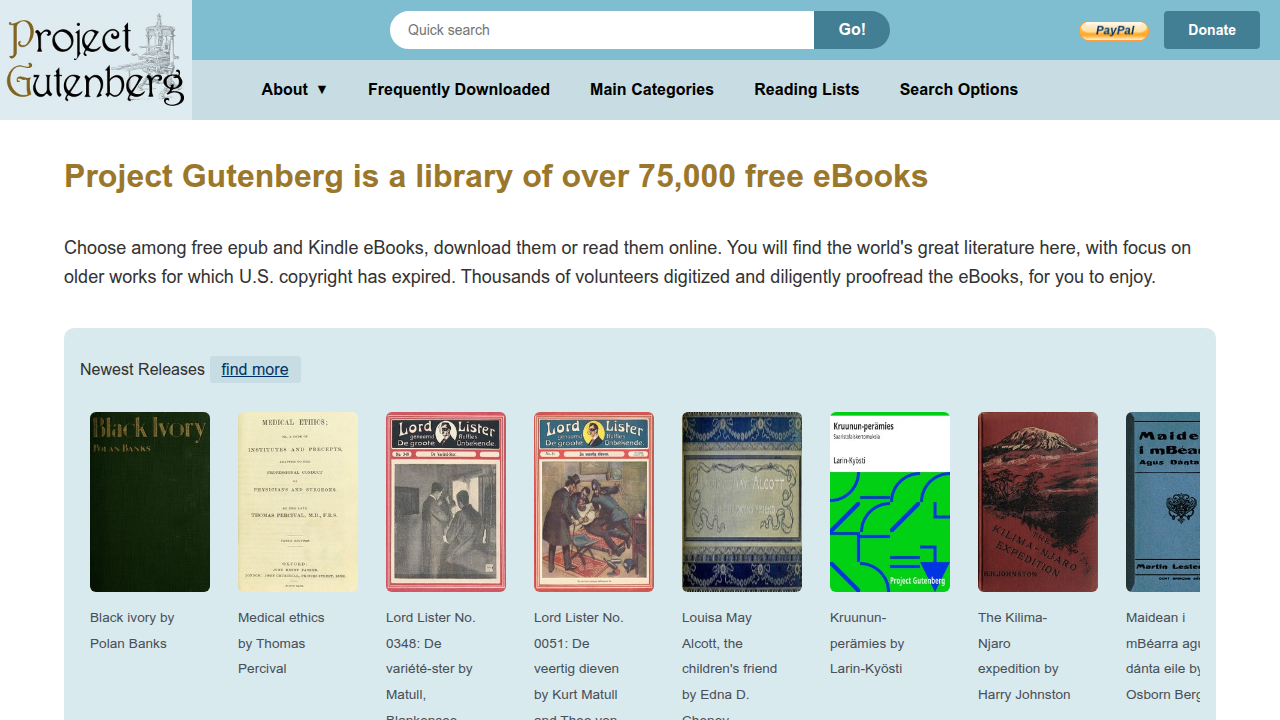
But here’s a secret: you don’t always need to spend money to find amazing science fiction stories. There are many great places to find books to read for free online. Places like the Gutenberg Project offer free books, including many classic tales at no cost.
These free platforms are still super important for readers like you in 2026.
This article will be your map to finding quality science fiction using these free resources. We will show you how to use big online archives, special lists, and tools that help you find exactly what you like. We’ll help you explore popular choices and hidden gems. We’ll even look at where to find good comic book reviews and find exciting new authors. If you’ve enjoyed books like the maze runner books and want more adventures without breaking the bank, keep reading. If you want to dive into different types of science fiction, you might even find something new and exciting that mixes fun with deep ideas. Want Better SF Comedy?
Finding great science fiction books to read for free is smart, but it helps to know how different places offer these books.
Some ways to find books are free, and some cost money. Let’s look at the different kinds of resources and what makes them special in 2026.
Types of Places to Find Books
You can think of book sources in a few main ways:
-
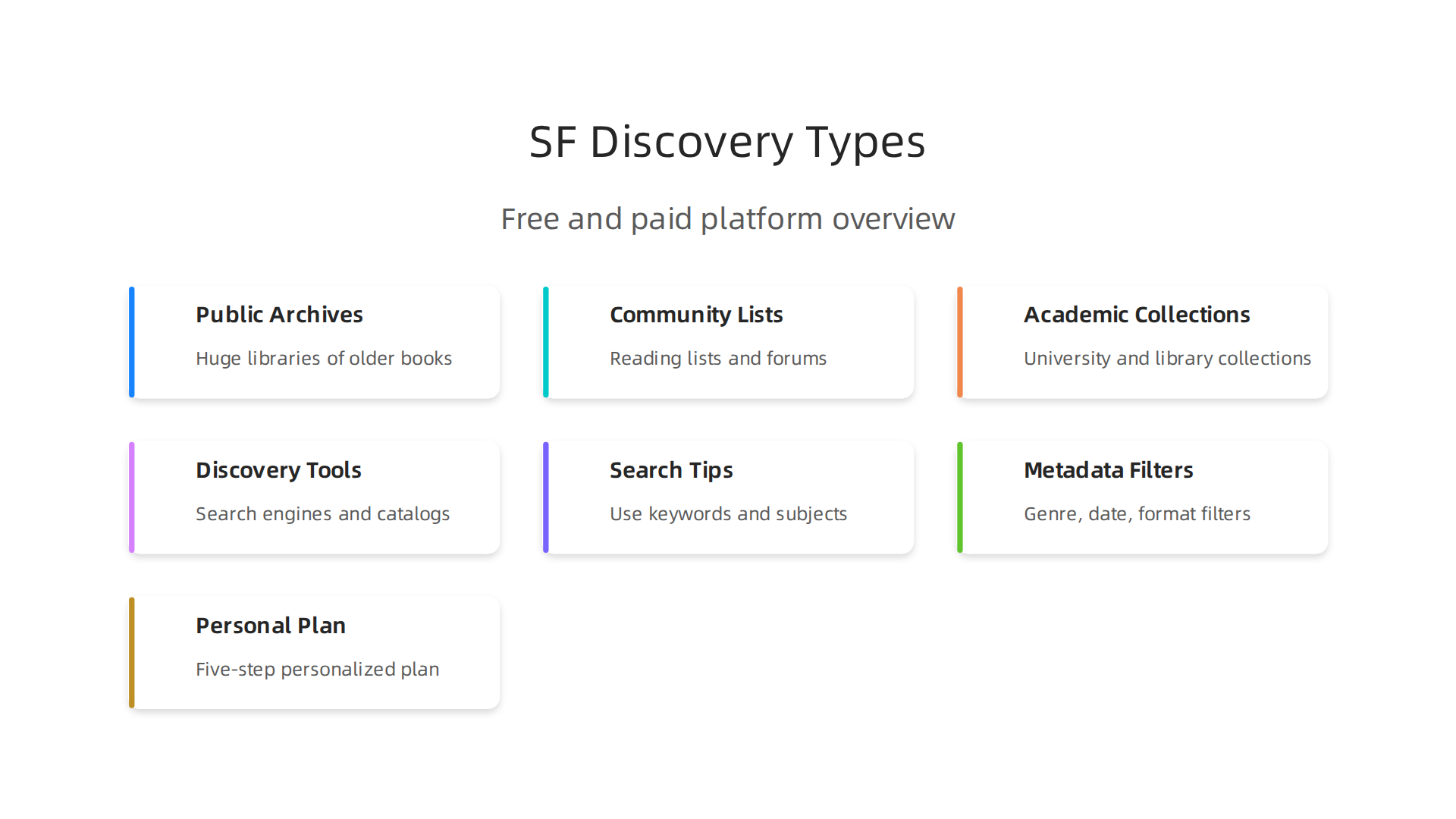
Public-Domain Archives: These are like huge online libraries for older books. The most famous one is Project Gutenberg, which offers many gutenberg project free books. These are books where the copyright has ended, so they belong to everyone now. They are best for classic science fiction and historical depth, like old stories that shaped the genre. You won’t find super new stories here, but you’ll find timeless ones.
-
Community Lists and Blogs: These are websites or groups where people share their favorite books and opinions. You might find lists of contemporary science fiction or even fun comic book reviews on these sites. They are great for seeing what other readers enjoy and for finding newer works or indie authors. The quality can vary, though, because it’s based on what individuals like.
-
Academic Collections and Open Access Libraries: Many universities and public libraries offer digital collections that you can use, often for free with a library card.
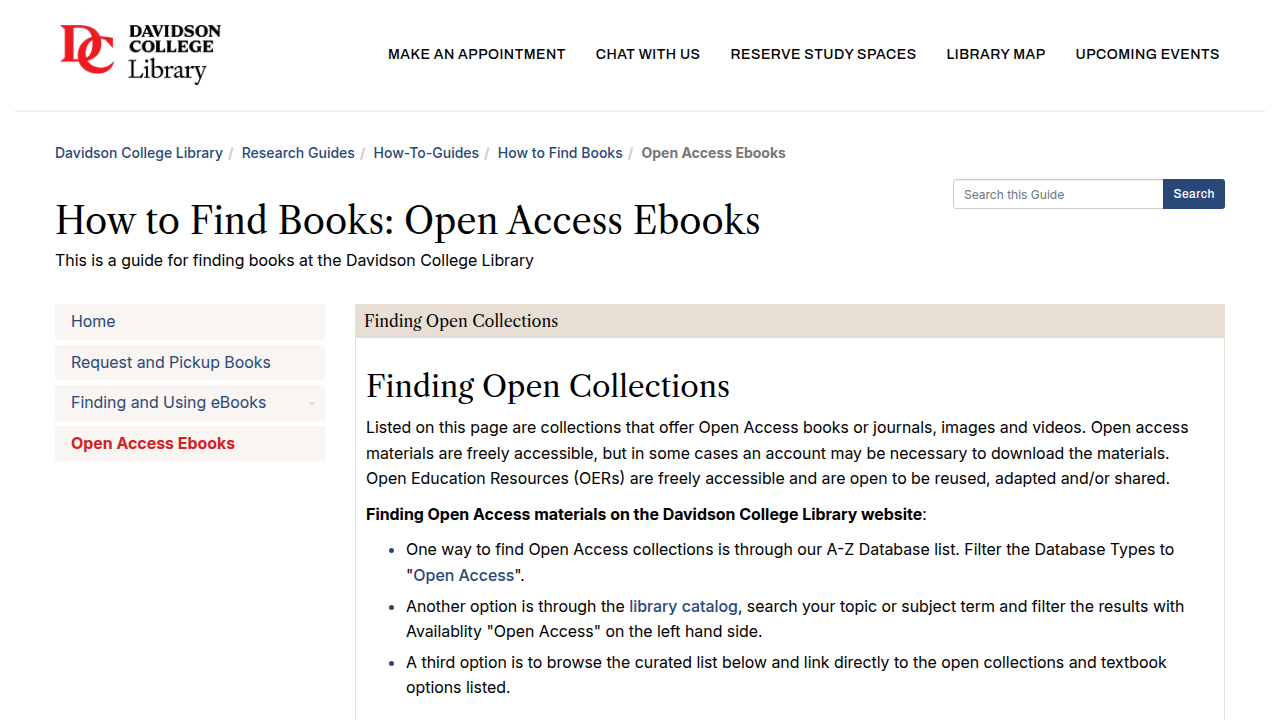
Some even have "open access" books that anyone can read. These can include scholarly works or even some newer books to read for free that authors want to share widely. You might need to look a bit harder, but they often have very trusted information.
- Discovery Tools: These are special search engines that help you find books across many different places. Think of them like a super-smart librarian. They let you use filters to narrow down your search, like finding books by a certain author or about a specific topic. Using a library discovery tool can simplify your searching by letting you refine results with filters like subject and author, as explained in articles like Simplify your searching with One Search, the Library Discovery Tool. These tools help you find exactly what you’re looking for, whether it’s free or paid. You can learn more about how to use these tools by understanding 7 strategies to find science fiction books on Kindle, which often involve similar search methods.
What’s Best: Picking Your Way to Discover Books
When you’re trying to find your next great read, especially if you’re looking for free options, you’ll see some differences:
-
Lots of Books vs. Hand-Picked Books: Public-domain archives like the Gutenberg Project have a huge number of books (that’s "comprehensiveness"). But they don’t have someone telling you which ones are "best." Paid services often have someone picking the best books for you (that’s "curation"). Community lists are also a kind of curation, but by regular readers.
-
Old Books vs. New Books: If you want books from a long time ago, public-domain archives offer amazing "historical depth." But if you want the newest stories and ideas, especially contemporary science fiction, you might find more of those through community sites, academic open access, or paid options. They offer more "freshness."
Understanding these differences helps you choose the best way to find the science fiction stories you’ll love, without spending money unless you want to.
Public-domain repositories: where classic SF lives (and how to search them
If you love older science fiction stories and want to find them without paying, public-domain repositories are your best friends. These are big online collections of books where the original owners no longer have special rights. This happens when a book is very old and its copyright has ended. Because of this, anyone can share or read these "gutenberg project free books" without breaking any rules.
Think of it like this: A long time ago, someone wrote a wonderful science fiction story. After many years, the special permission to print and sell that story expires. Once that happens, the book becomes free for everyone. This means you can find many classic science fiction novels, like those that shaped the entire genre, ready for you to enjoy. You won’t find the very newest science fiction releases here, but you will find stories that have stood the test of time.
How to Find What You Want
Finding books in these large collections needs a few simple tricks.
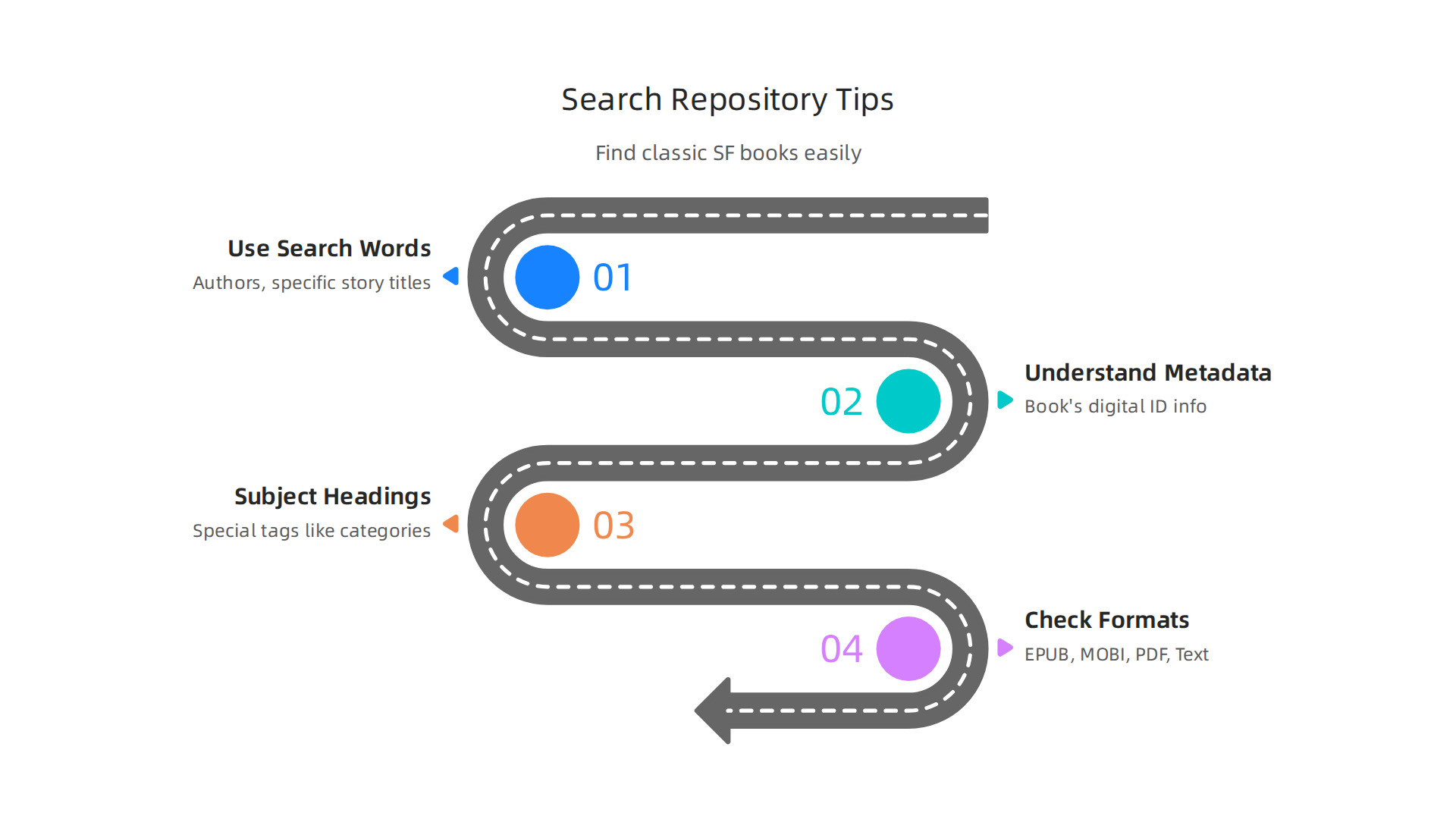
It’s like looking for a specific toy in a giant toy store.
-
Use Good Search Words: Instead of just "science fiction," try searching for authors you know, like Jules Verne or H.G. Wells. You can also look for specific story titles if you have them in mind.
-
Understand "Metadata": This is a fancy word for information about the book. It includes the author’s name, the book’s title, when it was published, and what it’s about. When you search, the website uses this metadata to help you find books. Good metadata helps you discover things easily. You can think of it as a book’s digital ID card, important for keeping online libraries organized, as explained in studies about metadata quality research.
-
Look at Subject Headings: Many public domain sites use special tags called "subject headings." These are like categories for books. For example, a book might have "science fiction," "adventure," or "space travel" as its subject headings. Clicking on these can show you other similar books to read for free. These headings are really useful because they act as signposts to help you explore related topics, much like how official catalogs use them to organize scientific literature for finding full-text versions, as detailed in the 2026 Scientific Literature Resources guide.
-
Check Download Formats: When you find a book, you’ll often see different ways to download it. Common types include:
- EPUB: Great for e-readers and many phone apps.
- MOBI: Often used for older Kindle devices.
- PDF: Good for reading on computers or for printing.
- Plain Text: Just the words, no pictures or special formatting.
Things to Watch Out For
Sometimes, searching these free libraries can be a little tricky.
- Older Language: Some classic science fiction uses words or ways of speaking that are not common today. It might take a moment to get used to.
- Spelling Differences: Older books might have different spellings for words than we use in 2026.
- Many Versions: You might find several versions of the same book. Try to pick the one that looks complete or best fits how you want to read it.
Despite these small challenges, these public-domain archives offer a treasure trove for anyone wanting to dive deep into the roots of science fiction without spending a dime. After all, the joy of reading a great story is priceless.
If you enjoy reading stories with a unique twist and a good laugh, you might like exploring different kinds of science fiction. Check out Read Smart Funny SF for a sci-fi comedy with absurd action and thoughtful punchlines.
If you’ve already explored the big public domain sites for classic science fiction, you might be wondering what else is out there. Beyond those huge collections, there are special places for genre fans that focus on very specific types of science fiction. These are called niche or specialized archives.
Think of them as smaller, more focused libraries. Instead of holding all kinds of books, they collect only certain ones. For example, some archives might only have works from a specific time period, like early 20th-century science fiction. Others might focus on a certain kind of story, such as alien invasion tales, stories about time travel, or even fantasy mixed with sci-fi. A good example is the Future Fantasy and Science Fiction Collection at Georgia Tech, which gathers materials from specific magazine series.
Finding Unique SF Treasures
These special collections are amazing for finding "hidden gems" or books that are not as well-known as the really famous ones.
This is where you might discover lesser-known authors or early works by writers who later became very popular.
Here’s how they can help:
- Focus on Subgenres: If you love "hard sci-fi" that tries to be very realistic, or maybe you’re into "steampunk," these archives might have collections just for those interests. You can easily dive deep into one area without getting lost in general searches.
- Author-Specific Collections: Sometimes, an archive will gather everything by one important author. This is great if you want to read all their works, including short stories or essays you wouldn’t find easily elsewhere. You might even find early versions of famous stories, like those that inspired "maze runner books."
- Historical Context: These places can show you how science fiction has changed over time. You might find original magazine issues or "comic book reviews" from long ago, giving you a peek into how readers reacted to stories when they first came out. This is different from finding "books to read for free" on general sites; it’s about seeing the history of the genre.
- Contemporary Science Fiction: While many archives focus on older works, some also curate collections of "contemporary science fiction," highlighting trends or new voices that are shaping the genre in 2026. This can help you stay up to date on what’s new and exciting.
By exploring these niche archives, you can expand your reading list beyond the usual titles and truly discover the depth and variety of science fiction. It’s like having a personal guide to specific parts of the genre. If you want to make sure you’re picking quality reads, learning how journal book reviews help sci-fi readers can be a useful skill, even for these specialized collections.
Sometimes, these specialized archives also include unique materials like convention programs, fan letters, or even early drafts of stories. For instance, the M. Horvat Science Fiction Convention Materials Collection houses items from various science fiction conventions, offering a unique look into the fan culture and history surrounding the genre.
Discovering these curated collections offers a richer, more tailored experience for any science fiction enthusiast.
Want Better SF Comedy? This series pairs cosmic absurdity with meaning and perspective. Explore it on doridiculous.com.
Beyond special collections, there’s another great way to find awesome science fiction: through other readers and your local library. These community spots and helpful library tools can open up a whole new world of stories, especially for finding books to read for free.
Community-Curated Resources: Reading Lists, Forums, and Local Library Discovery
Think about where people talk about books they love. Online groups, forums, and even shared reading lists are like huge conversations where everyone shares their favorite sci-fi finds.

What Community Lists and Forums Offer
When you join a science fiction community online, you get more than just book titles. You get:
- Context: People often explain why they like a book, giving you a better idea if it’s right for you. They might mention if a book feels like
maze runner booksor if it’s more like classic space opera. - Reader Notes: You’ll find notes on things like the writing style, how exciting the plot is, or if it has surprising twists. These real-reader thoughts are very helpful.
- Subgenre Recommendations: If you really love
contemporary science fictionabout climate change, for example, or older stories withcomic book reviewsfrom when they first came out, community members can point you to very specific books that match your taste. This helps you dive deep into your favorite kinds of stories.
It’s wise to check how reliable the information is. Look for communities with many active members and discussions, or those managed by people who clearly know a lot about science fiction. Some places might even discuss how to access gutenberg project free books or other public domain works, adding extra value.
Using Library Discovery Systems for Free Reads
Your local library is an amazing place to find books to read for free, and not just the ones on the shelves. Today’s libraries have powerful online tools called discovery systems or library catalogs.
Think of a library discovery system as a super search engine for everything your library has. Instead of searching different databases one by one, you can search all their books, e-books, audiobooks, and even movies at once. You can access this system right from your library’s website, usually through a simple search box on their homepage Searching Your Library Discovery System or Catalog | Books Gateway.
Here’s how these tools help you find sci-fi treasures:
- Easy Searching: Just type in a book title, an author’s name, or even a genre like "science fiction."
- Smart Filters: After your first search, you can use filters to make your results even better. You can filter by subject, author, or even type of material, like "e-book" or "audiobook" Simplify your searching with One Search, the Library Discovery Tool. This is especially useful if you’re looking for open-access e-books, which are often free How to Find Books: Open Access Ebooks.
- Interlibrary Loan: If your local library doesn’t have a specific science fiction book you’re looking for, don’t worry! Many libraries offer something called "interlibrary loan." This means they can borrow the book for you from another library, and you can pick it up at your local branch. It’s a fantastic way to get access to a wider range of titles without spending any money.
By using these systems, you can easily explore what’s available and get your hands on many books to read for free, expanding your science fiction journey. Sometimes, you might even find lists of hard sci-fi novels that respect real physics and tell gripping stories right in your library’s catalog, helping you pick your next great read.
If you enjoy sci-fi with a chuckle and a brainy twist, consider something a bit different. Read Smart Funny SF if you want a sci-fi comedy with absurd action and thoughtful punchlines.
Using your library’s online tools is smart, but knowing how to search is even smarter. Imagine you’re looking for a special toy in a giant toy store. If you just ask for "toy," you’ll get too many choices. But if you ask for "toy car, red, for age 5," it’s much easier to find. Searching for books works the same way!
Search tools, metadata filters, and browser tips to narrow results
To find the perfect science fiction book, you need to use the right search words and filters. Think of "metadata" as all the little facts and labels that describe a book. These facts help search tools know what the book is about. This is how libraries and online stores help you find exactly what you’re looking for, whether it’s contemporary science fiction or a classic.
What Are Metadata Filters and Why Do They Matter?
Metadata is like the book’s ID card. It includes things like the title, author, and what the book is about. These details are very important for finding books online Introduction to Metadata: Setting the Stage. Here are the main parts of a book’s ID card you should look for:
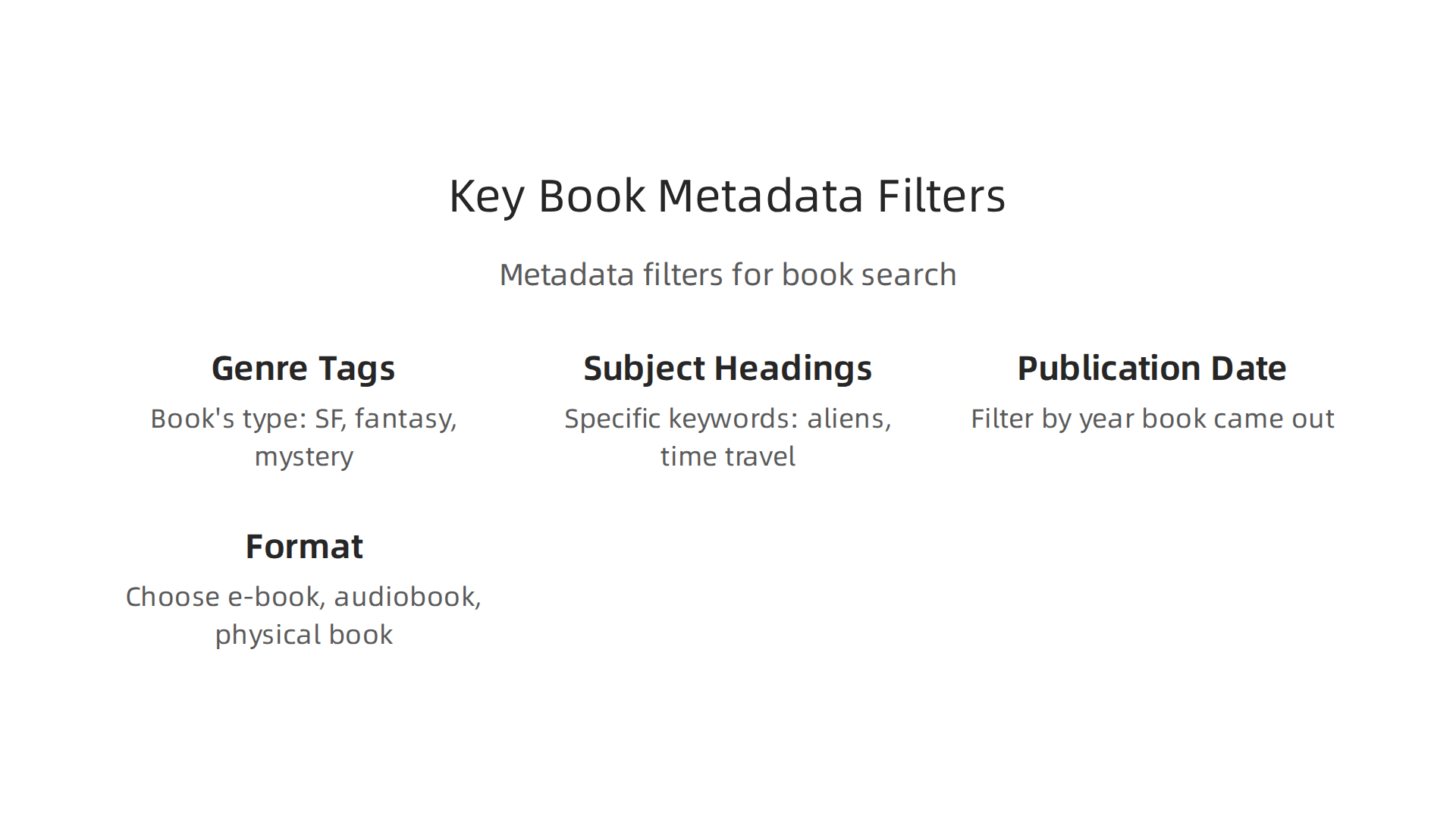
- Genre Tags: This tells you the book’s type, like "science fiction," "fantasy," or "mystery." If you love space adventures, you’d look for "space opera." If you’re into thrilling future stories, you might search for "dystopian" or similar subgenres. Knowing how to discover quality dystopian novels can really help you narrow down your choices.
- Subject Headings: These are like very specific keywords that describe the book’s topic. For science fiction, subjects might be "aliens," "time travel," or "robots." These are often more detailed than simple genre tags.
- Publication Date: Want to read the newest books from 2026? Or maybe you want older, classic science fiction? You can filter by the year the book came out. This is great for finding
gutenberg project free books, which are usually older books whose copyrights have run out. - Format: Do you want an e-book, an audiobook, or a physical book? Most search systems let you pick. This is super helpful when you’re specifically looking for
books to read for freeonline.
Using these filters helps you quickly go from a huge list of books to a smaller list of books you’re more likely to enjoy. Publishers also use good metadata to make sure their books get seen by the right readers Why is eBook Metadata Important?.
Smart Ways to Search for Books
Beyond filters, some search tricks can help you find more books to read for free:
- Boolean Operators: These are simple words like AND, OR, and NOT.
- Use AND to find books with both words. Example: "science fiction AND robots" will show books that have both science fiction and robots.
- Use OR to find books with one word or the other. Example: "aliens OR spaceships" will show books with either one.
- Use NOT to exclude a word. Example: "science fiction NOT romance" will remove books that are also romance stories.
- Batch Downloads and OPDS Feeds: For older, public domain books, like many
gutenberg project free books, you can sometimes find ways to download many at once. Some digital libraries offer something called an OPDS feed. Think of an OPDS feed as a special web address that a reading app can use to get a whole list of books from a library or collection, almost like a constantly updated digital catalog OPDS Catalog 1.2. This means you can add a library’s feed to your e-reader app and browse hundreds ofbooks to read for freewithout visiting many websites. Many apps can use these feeds to give you easy access to lots of content Importing your eBooks.com bookshelf as a catalog in Thorium.
By learning these simple ways to search and filter, you can easily find exactly the kind of science fiction stories that interest you. It saves time and helps you discover new favorites.
If you enjoy a bit of humor with your brainy sci-fi, you might want to explore stories that mix wit, chaos, and smart ideas.
Add The Ridiculous to Your List
Using those smart ways to search and filter, you can easily find exactly the kind of science fiction stories that interest you. It saves time and helps you discover new favorites. Now, let’s put it all together into a simple plan for finding books to read for free that are perfect for you.
Putting it together: personalized free discovery workflows for SF fans
Finding your next great science fiction read doesn’t have to be hard. Here’s a step-by-step plan to help you discover gutenberg project free books and other awesome stories, tailored just for you.
Your Quick Discovery Plan
- Know Your Favorite Type of Sci-Fi: Before you start, think about what kind of science fiction you love most. Is it fast-paced space adventures, stories about future worlds, or maybe even lighthearted science fiction that makes you laugh? For example, if you enjoy exploring complex societies, you might look for specific
contemporary science fictionor discovering quality adult dystopian novels. - Pick Your Hunt Spots: Choose a couple of places to search. This could be your local library’s online catalog, a digital archive like Project Gutenberg for
gutenberg project free books, or a site known for offeringbooks to read for free. - Use Filters Like a Pro:
- Genre and Subgenre: Start with "science fiction," then add more specific tags like "space opera," "cyberpunk," or "time travel."
- Publication Date: Decide if you want the newest reads from 2026 or older classics.
- Format: Only looking for e-books? Make sure to select that option.
- Subject Headings: These can be super helpful. If you love robots, type "robots" into the subject search.
- Check Community Reading Lists: Once you have a few ideas, look up reading lists from book clubs or online groups. Many libraries and academic groups share their picks for the year. For example, some universities even release their own recommendations like the UC Berkeley Summer Reading List or the 2026 NoveList Reading Challenge which spotlights different genres each month. This can help you find hidden gems or see what’s popular in
contemporary science fiction. You can also find tips on a guide to curating your reading list to make your own perfect list. - Save Your Finds: Keep a list of books you want to read. You can use an app, a note on your phone, or even a simple notebook. Many people share their yearly reading lists online, and you can even find videos offering tips like How to Build a Reading Habit That Actually Lasts.
Keeping Your Reading List Fresh and Exciting
To make sure you always have great books to read, think about these long-term tips:
- Subscribe to Feeds: If your reading app supports OPDS feeds, add feeds from digital libraries that offer
books to read for free. This way, new books show up automatically. - Create Shared Reading Lists: If you’re part of a book club or have friends who love sci-fi, work together to make a shared reading list. You can suggest books to each other and track what everyone is reading.
- Quickly Check New Books: When you find a new book, do a quick check to see if it’s right for you. Look at reviews or summaries. Learning how journal book reviews help sci fi readers can save you from spending time on books you might not enjoy. Look for consistent themes or authors known for specific styles, just like how people follow predictions for what’s What’s Going to Be Hot in 2026 – Predictions for Fiction in the publishing world.
Summary
This article is a practical guide to finding quality science fiction books for free in 2026, showing where good stories live and how to reach them without spending money. It explains the main source types—public‑domain archives (like Project Gutenberg), niche/specialized collections, library discovery systems, and community lists—and compares their strengths (comprehensiveness, curation, freshness, historical depth). You’ll learn simple search strategies (use better keywords, subject headings, and metadata filters), useful download formats (EPUB, MOBI, PDF, plain text), and smart tools like OPDS feeds and Boolean operators to narrow results. The piece also gives a compact discovery workflow: choose your subgenre, pick hunting spots, apply filters, check community recommendations, and save your finds. By the end you’ll know where to look, how to search efficiently, and how to build a steady free reading list of both classics and lesser‑known SF gems.