

Introduction: The Enduring Magic of Frances Hodgson Burnett
Have you ever opened a dusty old book and felt like you stepped into another world?

That is exactly what happens when you pick up a story by Frances Hodgson Burnett. For more than a century, her novels have carried readers from lonely mansions to hidden gardens, teaching us that kindness and imagination can change everything.
Burnett was born in Manchester, England in 1849 and moved to the United States as a teenager after her father passed away. Her family settled in Tennessee, and she began writing at a young age to help support them. Despite a hard start, she grew into one of the most beloved authors in childrens literature. Her books like The Secret Garden and A Little Princess still top reading lists today, alongside classics from authors like ernest hemingway and the 100 best novels of all time.
This article gives you a complete look at frances hodgson burnett: books, her life, the major themes she explored, and why her work still matters in 2026. We will also share curated insights to help you discover or rediscover her most cherished stories. Whether you are new to her work or a longtime fan, there is always something new to find.
For a deeper dive into why her stories have lasted so long, check out our piece on the enduring appeal of Frances Hodgson Burnett books. It shows how her characters continue to inspire readers of all ages.
So let us walk through the garden gate together. There is a lot to explore.
Who Was Frances Hodgson Burnett? A Brief Biography
So who was the woman behind those magical stories? Frances Hodgson Burnett lived a life that was just as interesting as the tales she wrote.
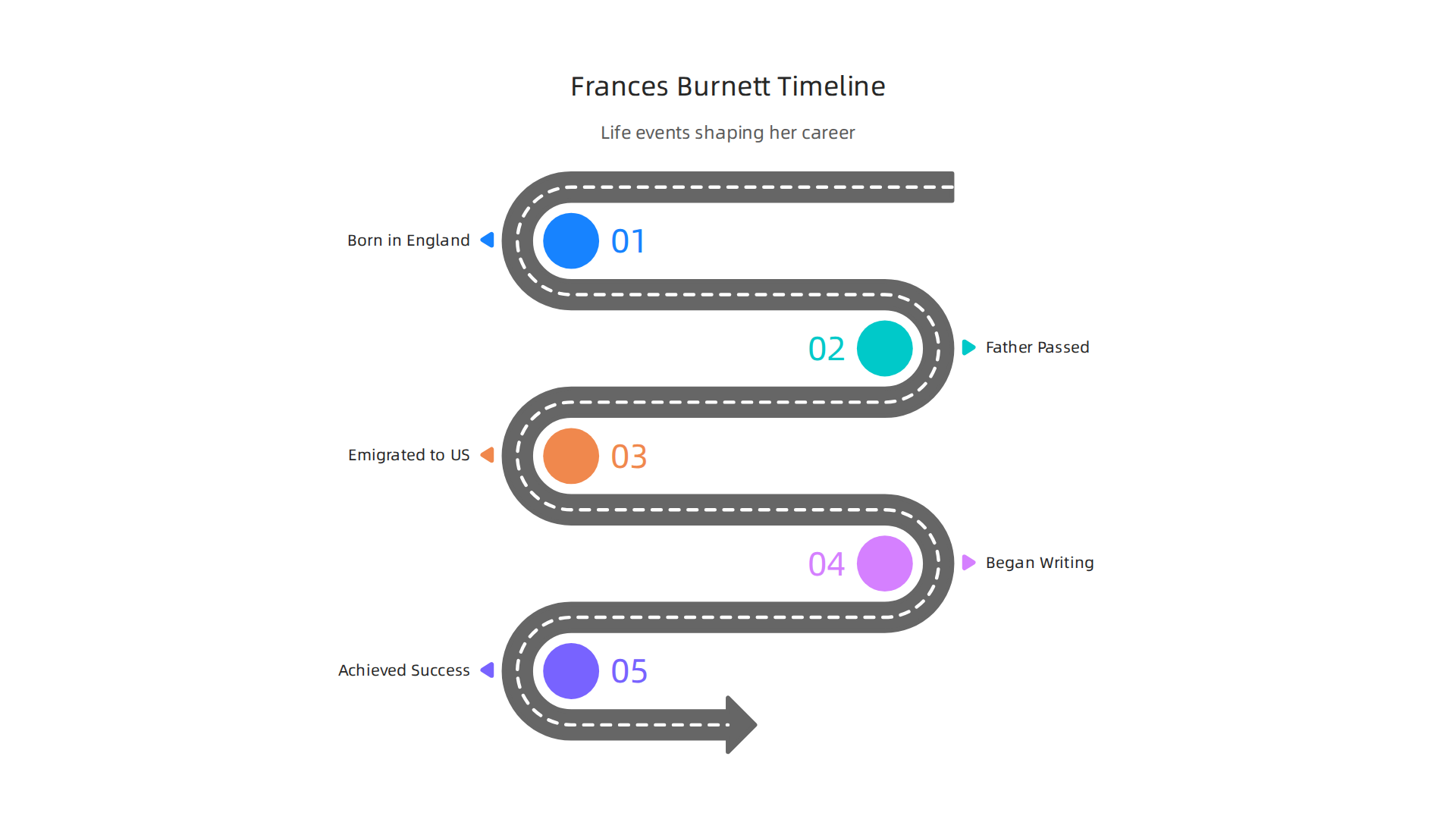
She was born Frances Eliza Hodgson on November 24, 1849, in Manchester, England. Her family did not have much money. Her father passed away when she was young, and life became even harder. When Frances was fifteen, her family made a big move. They emigrated to the United States in 1865 and settled in Tennessee. Can you imagine leaving everything you knew at that age?
To help support her family, Frances began writing stories. She started with adult novels and achieved early success. But it was her children’s books that made her a household name. She understood hardship because she had lived it. That is why her characters feel so real. They struggle, they hope, and they find their way. Her own experiences with loss and change shaped the compassion we see in stories like The Secret Garden and A Little Princess.
Burnett’s books became some of the most beloved children’s stories ever written. If you are looking for more wonderful reads for young people, check out our list of the best children’s book series for ages 6 to 12. It pairs perfectly with Burnett’s timeless classics.
Even after she became famous, Frances kept writing. She explored themes of transformation, resilience, and the power of kindness. Her life proved that even a difficult start can lead to something beautiful.
Her Most Beloved Books: The Secret Garden, A Little Princess, and Little Lord Fauntleroy
Now we get to the heart of frances hodgson burnett: books. Her three most famous novels are considered her true masterpieces. Each one has a different main character and explores unique themes, but they all share that warm, hopeful feeling Burnett was so good at creating.
You might be surprised to learn that not a single one of these books has ever gone out of print. That is a rare honor. They have also been turned into countless movies, TV shows, and plays over the years. Her writing is known for its strong themes of transformation, resilience, and the healing power of nature. These ideas show up again and again in her work.
Think of The Secret Garden, A Little Princess, and Little Lord Fauntleroy as the crown jewels of her collection. They are wonderful stories for both children and adults. If you enjoy these, you will want to explore more of the best children’s book series for ages 6 to 12 that kids actually love. And for a complete look at her work, check out our guide on the enduring appeal of Frances Hodgson Burnett books.
Let’s take a closer look at each of these beloved stories. We will start with the one that might be the most famous of all.
The Secret Garden (1911): A Story of Transformation
What happens when a lonely, spoiled girl finds a hidden key? In The Secret Garden, that small discovery changes everything. We meet Mary Lennox right after her parents die. She is grumpy and bossy. Nobody in her new home in England likes her. But then she finds a locked garden that has been abandoned for years.
This is where the real magic happens. Mary starts working in the garden. She digs, plants, and cares for things. Slowly, she changes. She makes friends with a local boy named Dickon. Together, they help Mary’s sick cousin Colin learn to walk and laugh again. The garden heals them all.
Burnett wrote this story to show that nature has real power to heal.

The book is filled with themes of resilience, growth, and honesty. It follows Mary as she sheds her sour attitude after discovering a secret, locked garden. The garden itself acts as a powerful symbol of hidden potential waiting to be brought to life through care and friendship.
Teachers love this book for its rich symbolism. You will find it on many school reading lists. It teaches kids that hard work and kindness can change everything. And unlike the short, sparse style of Ernest Hemingway books, Burnett fills every page with detailed descriptions. You can almost smell the soil and hear the birds singing.
This is truly a book for all ages. For teens discovering classic stories, it offers a clear path into more complex themes. Many readers say it belongs on any list of the 100 best novels. For anyone exploring frances hodgson burnett: books, this novel is the perfect starting point. If you want to explore more of her work, check out our guide on the enduring appeal of Frances Hodgson Burnett books.
A Little Princess (1905): Imagination and Kindness Against Adversity
What do you do when your whole world flips upside down? That is the question Sara Crewe faces in A Little Princess. She starts life as a rich girl at a fancy boarding school in London. Her father gives her everything. She has fancy clothes, dolls, and a pony. But then her father dies, and he loses all his money.
Suddenly, Sara becomes a servant. The mean headmistress, Miss Minchin, forces her to sleep in a cold attic and work all day. This is a brutal change. Most kids would break down. But Sara does not give up.
Instead, she uses her imagination. She tells herself stories about being a princess.

She treats everyone with kindness, even when they are cruel to her. This inner strength helps her survive. Burnett shows us that real wealth comes from inside.
The children in Burnett’s books embody values we still need today: resilience, growth, honesty, and the way those can change everything. Sara’s story is a perfect example. She holds on to her dignity even when she has nothing. The tale follows a young girl who maintains her grace and empathy through terrible hardship.
This book has been turned into several movies and a popular musical. It is a favorite among books for teens because it speaks to anyone who has ever felt powerless. If you loved The Secret Garden, you will adore this one too. It belongs on any list of the 100 best novels for young readers. And unlike the spare style of Ernest Hemingway books, Burnett’s writing is full of warmth and vivid detail.
For younger readers discovering classic stories, A Little Princess is a perfect next step. If you want more recommendations like this, check out our guide on the best children’s book series for ages 6 to 12 that kids actually love.
Little Lord Fauntleroy (1886): The Ragged-to-Riches Story That Started It All
Before The Secret Garden and A Little Princess, Frances Hodgson Burnett wrote a book that made her a household name. That book was Little Lord Fauntleroy. It came out in 1886 and became an instant hit around the world.
The story follows Cedric Errol, a poor boy living in New York City. He is kind, honest, and brave. Then one day, he learns he is the heir to an English earldom. He moves to England to live with his grumpy grandfather, the Earl of Dorincourt. The Earl is cold and bitter at first. But Cedric’s goodness slowly melts his heart.
Burnett created what we now call the “ragged boy” archetype. A child from humble beginnings who wins people over with pure character. The book explores political topics like the relationship between America and England. It also shows that class and money don’t define a person. Cedric proves that moral goodness can change even the hardest heart.
The book did something unusual. It changed fashion. Boys across America and Europe started wearing velvet suits with lace collars, just like Cedric. Burnett’s children embody values we still need today: resilience, growth, honesty. Little Lord Fauntleroy helped people see childhood as a time of innocence and influence.
If you want to explore more of what makes these books so special, check out our guide on the enduring appeal of Frances Hodgson Burnett books. It is a great next step after reading this classic.
Recurring Themes in Burnett’s Writing
Now that we have seen how Burnett’s books work on their own, let us look at what ties them together. Across her most famous stories, the same big ideas keep showing up. And these ideas are why her books still feel fresh more than a hundred years later.
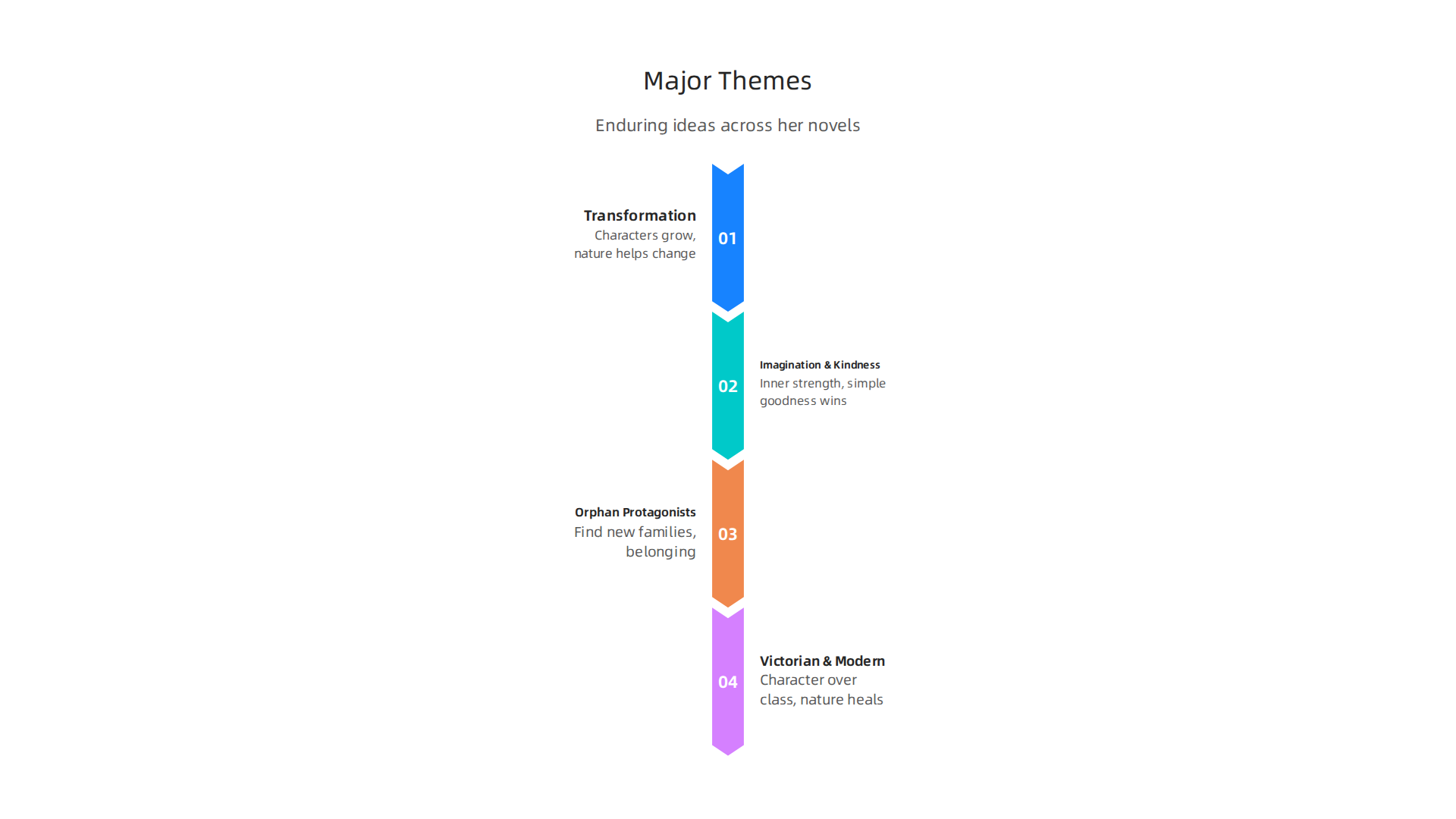
The biggest theme in Burnett’s writing is transformation. Characters do not stay the same. They grow. And nature almost always helps them change. In The Secret Garden, Mary Lennox goes from a spoiled, lonely girl to a happy, healthy child. The garden makes that possible. Burnett’s work is full of this kind of warmhearted storytelling about resilience and the healing power of nature. The garden itself becomes a space where healing and personal change happen naturally. This is not just a nice idea. It is a pattern she used again and again.
Another theme is the power of imagination and kindness. Cedric in Little Lord Fauntleroy changes a bitter old man with simple goodness. Sara Crewe in A Little Princess survives hard times by telling herself stories. Mary and Colin in The Secret Garden learn to think differently about themselves and the world. Friendship and personal growth are central to almost every Burnett novel. Her characters do not win by being rich or powerful. They win by being kind and using their imaginations.
Many of Burnett’s protagonists are orphans. Mary, Sara, and Cedric all lose parents early. They must find new families and new places to belong. Themes of isolation, illness, and finding purpose through caring for others run throughout her work. These children do not stay broken. They heal by forming real connections with people and with nature.

Finally, Burnett’s books bridge Victorian ideas and modern feelings. Her stories teach that character matters more than class. That nature can heal. That imagination is a real strength. These messages feel just as true today. If you want to explore how these themes play out across all her major works, check out our guide on the enduring appeal of Frances Hodgson Burnett books. It is the perfect next stop on your journey through her world.
Adaptations and Enduring Legacy
The themes we explored did not stay on the page. Burnett’s stories have traveled far beyond books. They have been turned into countless films, TV series, stage plays, and even ballets. That is the mark of truly lasting stories.
The Secret Garden alone has more than a dozen film and TV adaptations. The 1993 film version is probably the most famous. But new versions keep coming. A 2020 film brought the story to a new generation of viewers. The novel is still being adapted for stage and television regularly, proving it has not lost its magic. There is even a sequel set at Misselthwaite Manor after World War II, called Back To The Secret Garden (2000).
Burnett’s influence reaches beyond her own adaptations. You can see her fingerprints in later children’s authors like J.K. Rowling and Roald Dahl. Orphaned children discovering hidden worlds. Kindness winning over cruelty. Imagination as a survival tool. These ideas show up again and again in modern classics.
Here is the thing. Burnett’s books have lasted because they speak to something real. A child finding a secret garden. A girl pretending her way through hardship. A boy softening a bitter old man. These stories work in any decade.
If you want to introduce a young reader to Burnett’s world, start with The Secret Garden or A Little Princess. Both are perfect for kids who love stories about growth and discovery. And if your child loves those, they will probably enjoy other timeless stories too. Check out our guide on the best children’s book series for ages 6 to 12 for more recommendations that have that same lasting appeal.
Burnett wrote her books over a hundred years ago. But her stories are still finding new audiences. That is not just luck. That is a legacy built on truth and heart.
Why These Books Remain Classics Today
It is one thing for a story to survive a hundred years. It is another for it to still feel alive. That is the case with Frances Hodgson Burnett books. They are not dusty relics sitting on a library shelf. They are living stories that children and adults still reach for in 2026.
Why? Because they are built on universal themes. Hope. Resilience. The quiet magic of childhood. These ideas do not age. A child discovering a hidden garden or a girl using her imagination to survive hard times works just as well today as it did in 1911. That is why each new generation finds its way to these stories. The quietly magical 1990s revival of Burnett’s work shows how easily her books pass from parent to child.
Schools have also kept these books alive. Teachers put them on reading lists because they do more than just tell a good story. They teach emotional intelligence. The characters in Burnett’s novels feel real emotions. They get lonely. They struggle with anger. They learn to care for others. In a world that moves fast, these lessons about empathy are exactly what young readers need. That is why her books are not just for younger kids. They work as books for teens and adults too.
Burnett’s focus on kindness and inner strength is what makes her stories timeless. She wrote about the heart. And the heart does not change.
If you want to understand why these stories last, take a closer look at the bigger picture in our guide on the enduring appeal of Frances Hodgson Burnett books. It explains exactly why her work keeps finding new fans.
How to Start Reading Frances Hodgson Burnett: A Guide for New Readers
So you are ready to dive into the world of Frances Hodgson Burnett: books. That is great news. But where do you begin? With three major novels and several lesser-known works, the starting point matters. Here is the reading order that most fans recommend.
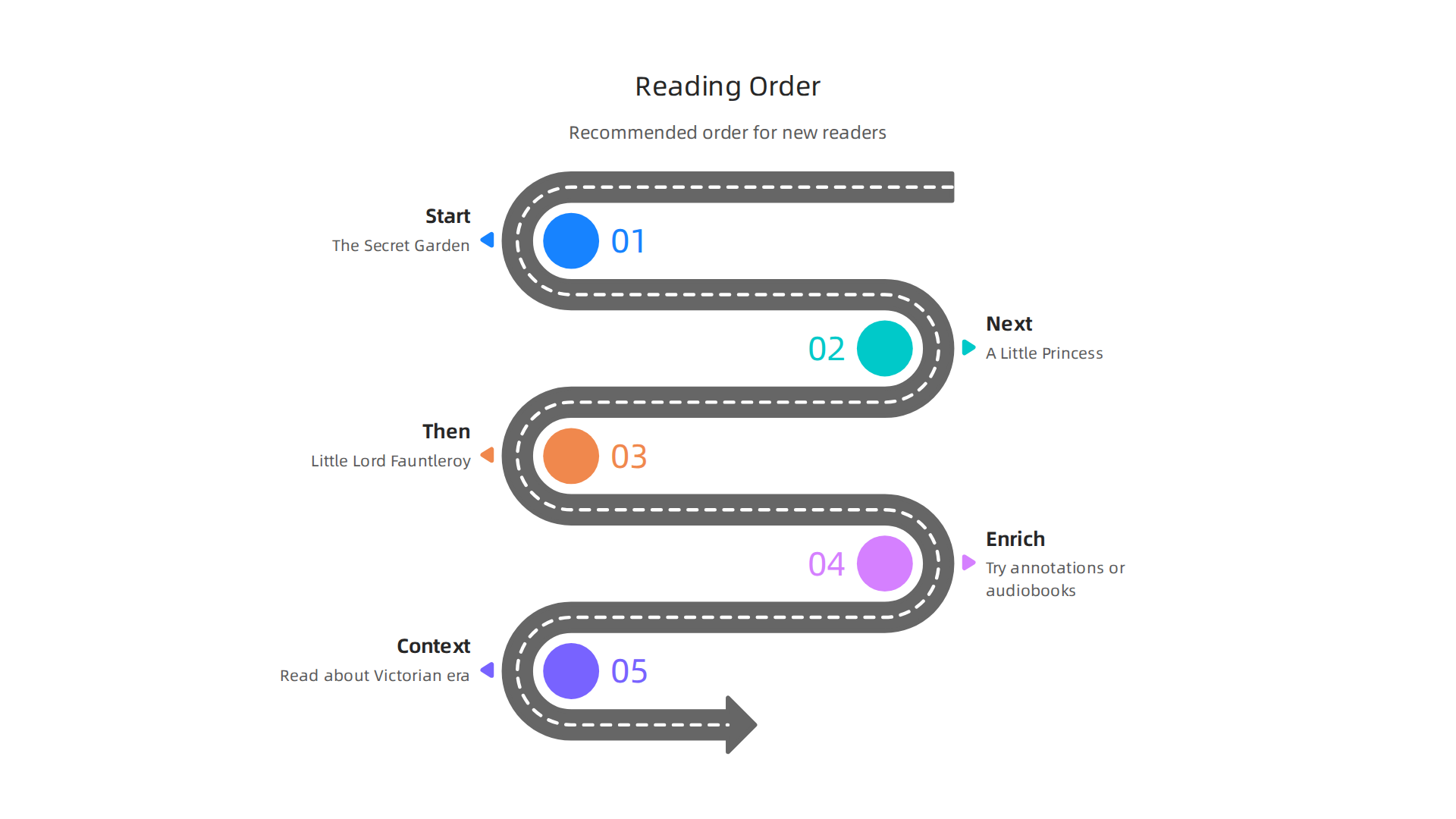
Start with The Secret Garden.
This is Burnett’s most famous book for a reason. It tells the story of Mary Lennox, a lonely orphan who discovers a hidden garden and, in the process, learns to heal herself and others. The themes of nature, friendship, and resilience are universal. If you enjoy this one, you will almost certainly love her other works. You can even find an annotated version with reading strategies that adds deeper context for each chapter.
Next, read A Little Princess.
This story follows Sara Crewe, a wealthy girl who suddenly becomes a servant after her father dies. She uses her imagination and kindness to survive. The emotional depth here is strong. It works perfectly as one of those books for teens because it deals with identity and perseverance in a very real way.
Then, finish with Little Lord Fauntleroy.
This is the book that made Burnett famous. It is lighter than the others, but it shows her ability to write about class, family, and the power of a good heart. Many readers skip this one, but it adds depth to your understanding of her as a writer.
For a richer experience, try annotations or audiobooks.
Teachers and parents often pair these books with lesson plans and worksheets to help young readers connect with the themes. There are also thematic units for upper elementary students that use adaptions of The Secret Garden. Audiobooks narrated by acclaimed actors can bring the Victorian language to life. You can also read her classic novels free online, which is perfect for testing the waters.
Pair these stories with context about the Victorian era.
Knowing a little about the time period makes the stories richer. Read about Victorian London, the class system, and children’s literature history. Even a short overview helps. For educators or book clubs, there are novel study classes for 4th and 5th graders that focus on the healing power of the story.
If you are looking for similar wholesome reads for young readers, check out our guide on the best children’s book series for ages 6 to 12 that kids actually love. It pairs perfectly with Burnett’s gentle storytelling style.
The best part? Once you finish these three, you will see how they inspired so many later authors. Even writers like Ernest Hemingway books and the creators of the 100 best novels owe a debt to Burnett’s emotional honesty. Her stories are the perfect entry point into classic literature.
Summary
This article offers a reader‑friendly guide to Frances Hodgson Burnett and her most beloved books, explaining who she was, why her stories have lasted, and how to begin reading them today. It profiles Burnett’s life from Manchester to the United States and traces how her early hardships shaped novels like The Secret Garden, A Little Princess, and Little Lord Fauntleroy. The piece highlights recurring themes—transformation, imagination, kindness, and the healing power of nature—and shows how those ideas keep her work relevant to children, teens, and adults. You’ll find an overview of major adaptations, classroom uses, and why teachers still assign her novels, plus a recommended reading order and practical tips (audiobooks, annotated editions, lesson plans) to get the most from these classics. After reading, you’ll know which book to start with, how the stories connect, and where to look for further resources and similar reading suggestions.