Introduction: Why Banned Books Matter for SF Readers
Think about the books that stick with you long after you turn the last page. The ones that challenge how you see the world. The stories that ask uncomfortable questions about power, identity, and society. Now, what if someone decided you were not allowed to read them?
That is the reality of censorship. In the United States, the first recorded book ban took place all the way back in 1637 in Quincy, Massachusetts. From that point forward, the act of banning books has been a recurring part of our cultural story. Books like James Joyce’s Ulysses were effectively banned in the US after an obscenity trial in 1921. And in 2026, the conversation around what belongs on library shelves remains as heated as ever.
So why should science fiction readers care about banned books?
Here is the thing. Science fiction has always been a genre that challenges the status quo. It imagines different futures, different rules, and different ways of being human. That makes it a frequent target for censorship. When you look at the list of books that have been challenged or banned over the years, you will find many of the best historical novels of all time and groundbreaking works of SF sitting right next to each other.
But censorship does not just silence voices. It also highlights which stories truly matter. The most provocative SF pushes boundaries. It makes you think. It refuses to play it safe.

Some of the most famous names in literature have been dragged through the mud. Even classic works like emily brontë books were once considered too dark or dangerous for readers. More recently, transgressive works like burroughs novels have faced obscenity trials. The pattern is clear: when a book has the power to disturb, it also has the power to enlighten.
As an SF reader, understanding this history enriches everything you read. It helps you see the genre not just as entertainment, but as a vital space for asking big questions. This guide is designed to help you navigate that landscape. We have curated a path through the most thought provoking and controversial science fiction so you can discover stories that offer depth, context, and a little bit of rebellion.
Ready to find your next great read in a genre that dares to ask the hard questions?
Browse Recommendations and start exploring the books that challenged the rules.
The History of Banned Books: From Ancient Scrolls to Modern SF
Book banning is not a new idea. In fact, it goes back thousands of years. Ancient rulers burned scrolls to control what people could learn. But here is the thing: the reasons for banning books have not changed much over time. They usually come down to fear of new ideas.
In the United States, the first recorded book ban took place in 1637 in what is now Quincy, Massachusetts.
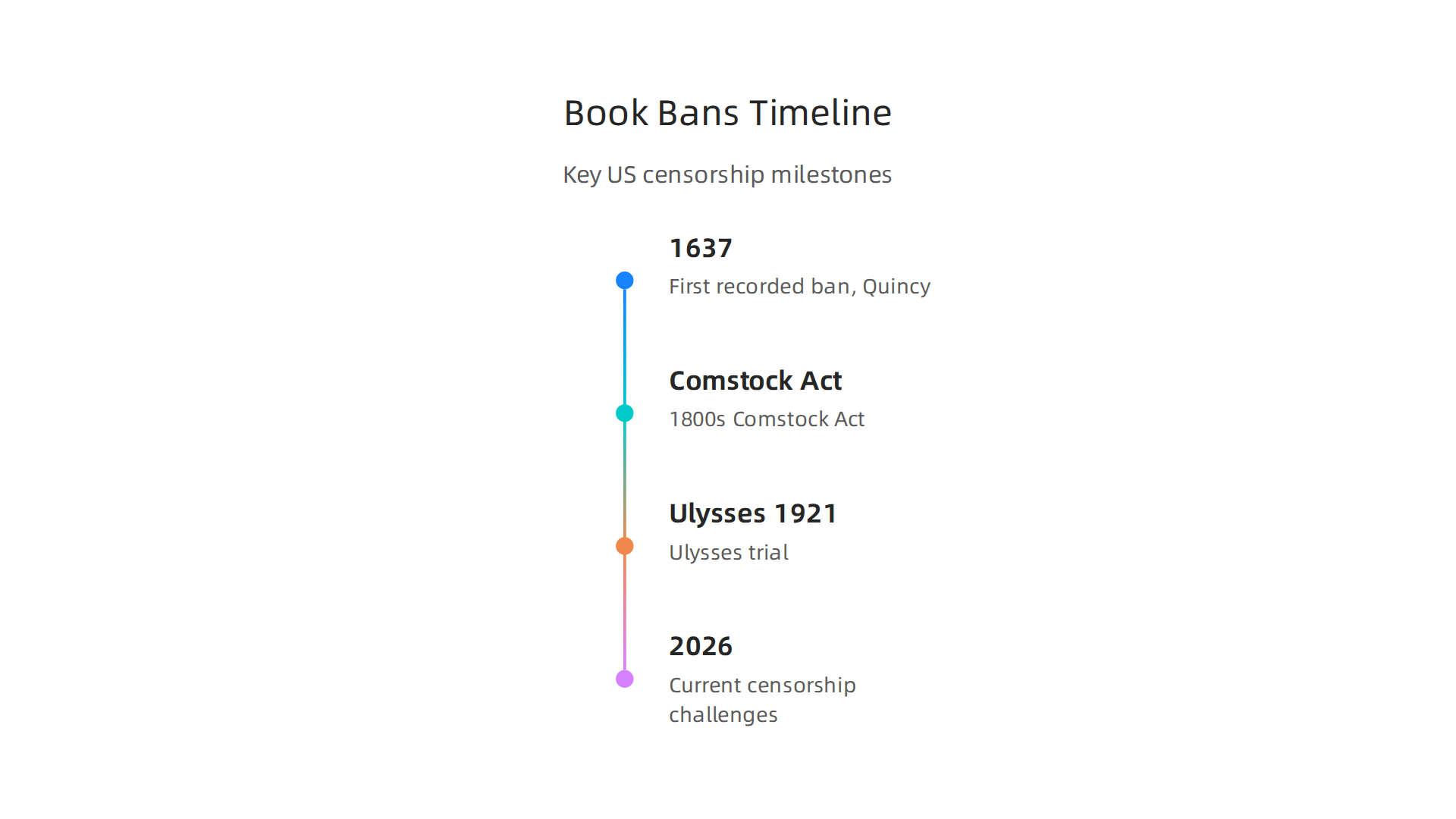
A book called New English Canaan was pulled from shelves because it criticized the Puritan leaders. That pattern repeated itself over and over. By the 1800s, federal laws like the Comstock Act made it illegal to send "obscene" materials through the mail. This is how many books got caught in the censorship net.
But science fiction faced a different kind of heat. Why? Because SF imagines worlds that question authority. It asks "what if" about society, government, and human nature. That makes it dangerous to people who want to keep things the way they are.
Take Ray Bradbury’s Fahrenheit 451 for example. It is a novel about a future where books are burned to keep people from thinking. But here is the ironic twist. The book itself has been challenged and banned many times. Schools and libraries have pulled it from shelves because of language or themes. The WVU research guide on banned books points out that the images from that novel are not just fiction. They are real events happening in our own history.
And it does not stop there. In 2026, the battle over banned books is still raging. A recent study in the journal PMC found that children’s books written by authors of color are being targeted at very high rates. Libraries and schools remain the main battlegrounds. Parents, activists, and school boards argue over what belongs on the shelves.
So what does this mean for you as an SF reader? It means every time you pick up a book that was challenged, you are taking part in a long tradition. You are choosing to think freely. And you are helping keep those stories alive.
If you want to discover more books that challenge the rules, Browse Recommendations and find your next great read.
Why Science Fiction Faces Unique Censorship Challenges
Now that we have seen the long history of book bans, it is time to look at why science fiction gets targeted more than most other genres. The answer is simple. SF dares to question the things we take for granted.
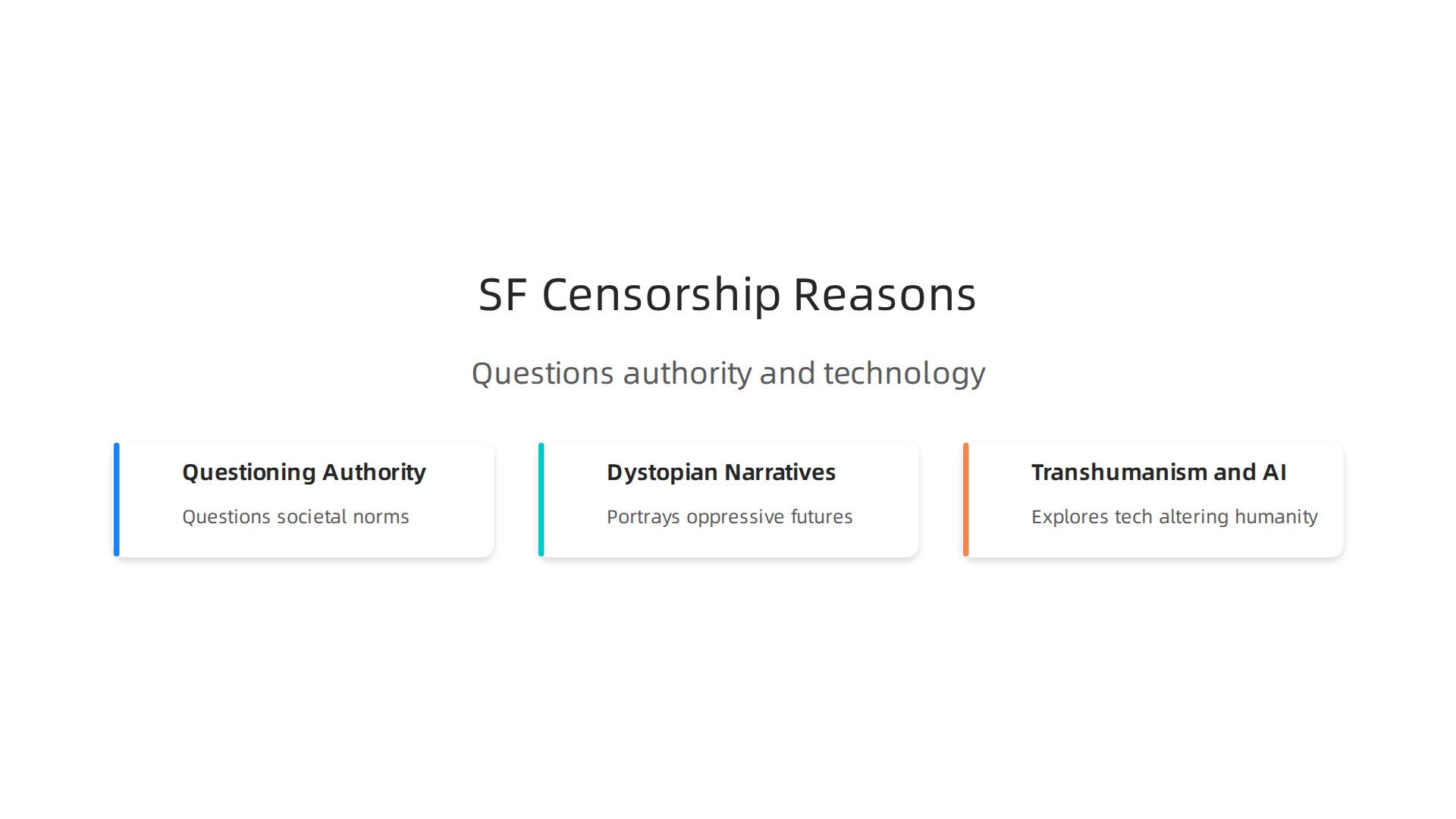
Think about it. Science fiction imagines worlds where governments are corrupt, religions are questioned, and human nature is remade. That kind of thinking makes some people uncomfortable. And when people are uncomfortable, they often try to silence the books that cause it.
Questioning Authority and Social Norms
Many classic SF stories challenge the very idea of authority. Take Aldous Huxley’s Brave New World. This book shows a future where people have almost no freedom. They are controlled by pleasure and drugs. It is a stark warning about losing our humanity. And it has been challenged many times for its views on government and society. The same goes for Margaret Atwood’s The Handmaid’s Tale, which imagines a world where women lose all their rights. Both books are frequently banned in schools and libraries.
According to a list of polarizing science fiction books, these novels spark strong reactions because they force readers to look at uncomfortable truths. That is exactly what censors do not want.
Dystopian Narratives and Anti-Government Fears
Dystopian stories are some of the most challenged in the SF genre. Why? Because they often show governments as oppressive or corrupt. When a book makes a ruling party look bad, some people see it as a threat.
For example, Parable of the Sower by Octavia Butler is about a teenager trying to survive in a collapsing world. The book is brutally honest about inequality and climate change. It is no surprise that it appears on many banned books lists, including the 2026 Banned Books Challenge.
Transhumanism and AI Raise Ethical Objections
Another reason SF faces unique censorship is its exploration of transhumanism and artificial intelligence. Stories about humans upgrading their bodies with technology or creating conscious AI machines. These themes raise deep ethical and religious questions. Some groups see them as playing God.
For instance, books that explore genetic engineering or mind uploading are often challenged for promoting "unnatural" ideas. The fear is that they might lead readers to question traditional beliefs about what it means to be human.
Many of the SF authors who write about these topics are among the top selling authors of all time. Their books have fans all over the world, yet they still face removal from shelves.
The Bottom Line
In 2026, the fight over banned SF books is as strong as ever. But here is the thing. Every time you read a challenged book, you are doing something powerful. You are choosing to think freely. You are saying that ideas matter.

If you want to find more books that push boundaries and question authority, browse our recommendations for curated lists of classic and modern SF. These are the stories that make you think. And that is exactly why they matter most.
Controversial Themes in SF: A Deeper Dive
We have seen how science fiction questions authority and explores transhumanism. But the controversy goes even deeper. Many classic SF books get banned because they tackle themes that some people find simply too hot to handle: sexuality, violence, political critique, and religious subversion.
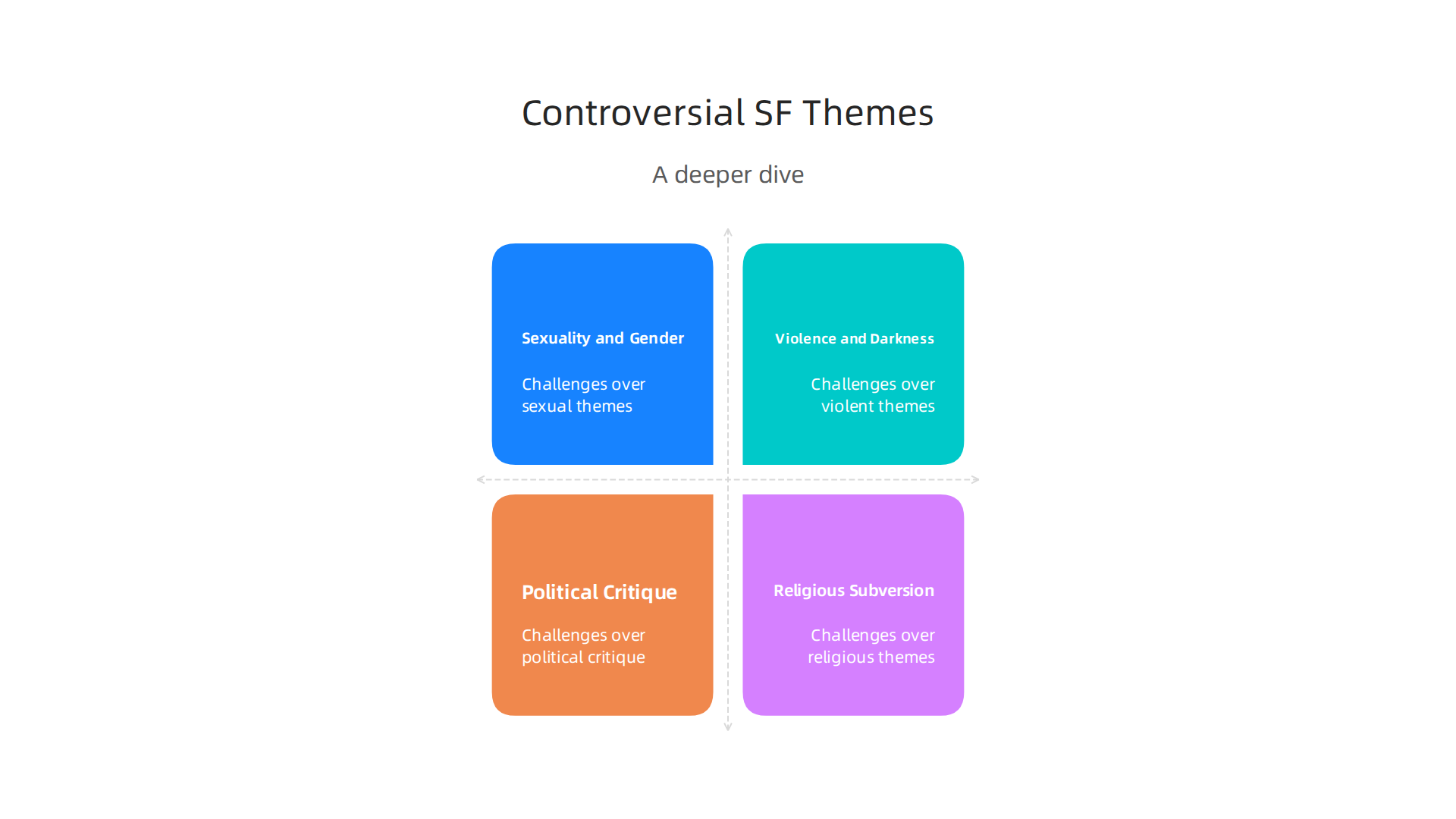
These are the flashpoints that spark the most challenges.
Let us look at each one.
Sexuality and Gender
Science fiction has always pushed boundaries when it comes to gender and sexuality. Ursula K. Le Guin’s The Left Hand of Darkness is a perfect example. The book is set on a planet where people have no fixed gender. They can become male or female at different times. This idea challenged traditional views about gender roles. It has been challenged in schools and libraries for decades.
Another classic is Robert Heinlein’s Stranger in a Strange Land. This novel was one of the first to openly explore free love and alternative lifestyles. It also criticized organized religion. Both books are frequently listed as polarizing science fiction books because they make readers question deeply held beliefs.
Violence and Darkness
Violent themes also trigger bans. Books like The Hunger Games have been challenged for their graphic depictions of violence among children. But SF has always used violence to make a point. Think about Parable of the Sower by Octavia Butler. This book shows a brutal world of collapse and survival. It is not violence for shock value. It is a warning about the direction society is heading.
Many of the titles on the 2026 Banned Books Challenge list include SF books that refuse to look away from darkness. That honesty is powerful. But it also makes censors nervous.
Political Critique
We touched on this earlier, but it is worth repeating. SF that criticizes governments or political systems gets targeted fast. The Handmaid’s Tale is one of the most challenged books in America. It shows a theocratic regime that strips women of rights. It is a direct political critique. And it keeps landing on banned book lists year after year.
Religious Subversion
Some SF books question or subvert religious beliefs. Stranger in a Strange Land again is a great example. The main character creates a new religion. That alone makes it a target. Other books like His Dark Materials (which mixes fantasy and SF) openly oppose religious authority. These books are often banned in schools because parents fear they will undermine their children’s faith.
If you want to understand why these books are so powerful, look at the list of top selling authors of all time. Many SF writers appear there. Their work connects with readers deeply. That is exactly why censors want to remove them.
Why This Matters
In 2026, the debate over controversial themes in SF is not dying down. But here is the truth: these themes are what make the genre great. They help us think about big questions. They make us more thoughtful humans.
Ready to explore more books that challenge and inspire? Browse our curated recommendations for classic and modern science fiction. These are the stories that will make you see the world differently.
Curated List: Banned and Challenged Science Fiction Books
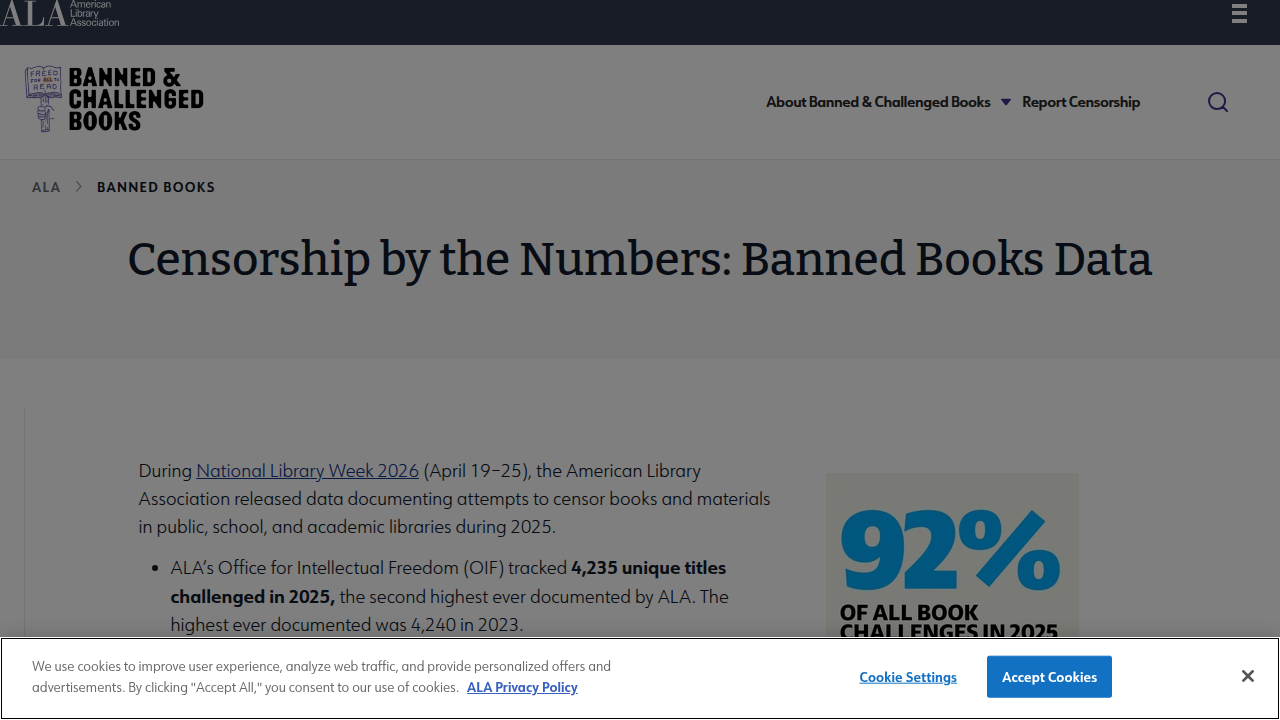
In 2025, the American Library Association tracked over 4,235 unique titles that were challenged in schools and libraries across the United States. That was the second highest number ever recorded. Science fiction books make up a big chunk of those challenges. Why? Because SF dares to ask hard questions about power, identity, and the future.
Below is a carefully chosen list of 10 to 15 banned and challenged science fiction books. Each one has lasting literary value. Each one was targeted by censors for different reasons. And each one still matters today.
- 1984 by George Orwell – Challenged for its dark view of government surveillance and totalitarianism. It still matters because it warns us about losing privacy and freedom in the digital age.
- Brave New World by Aldous Huxley – Targeted for its portrayals of drugs, free love, and a controlled society. This book asks if a happy but hollow world is worth the cost.
- Fahrenheit 451 by Ray Bradbury – Often banned for strong language and themes of censorship. The irony is that the book itself is about why we must fight to protect books.
- The Handmaid’s Tale by Margaret Atwood – One of the most challenged books year after year. It shows a religious dictatorship that strips women of rights. It still sparks debates about gender and freedom.
- The Hunger Games by Suzanne Collins – Banned in some places for graphic violence involving teenagers. But it uses that violence to criticize war and inequality. Young readers connect with its message of resistance.
- A Clockwork Orange by Anthony Burgess – Targeted for extreme violence and language. Yet it explores free will and the ethics of behavior control. It remains a powerful study of good and evil.
- Parable of the Sower by Octavia Butler – Challenged for its dark depiction of societal collapse and violence. This book is a prophetic look at climate change and systemic failure. It gives us a warning we still need.
- The Left Hand of Darkness by Ursula K. Le Guin – Targeted for its exploration of gender fluidity. It challenges the idea that male and female are fixed categories. It remains a groundbreaking work of feminist SF.
- Stranger in a Strange Land by Robert Heinlein – Banned for its open treatment of sex, religion, and alternative lifestyles. It forces readers to question social norms and spiritual beliefs.
- His Dark Materials series by Philip Pullman – Often challenged for its critical view of organized religion. While it blends fantasy and science, its themes of free thought and authority make it a target.
- Ender’s Game by Orson Scott Card – Banned in some schools for violence and the author’s personal views. The book itself deals with child soldiers and the morality of war. It still sparks important conversations.
- The Giver by Lois Lowry – Targeted for its dark themes and scenes of euthanasia. This gentle dystopia asks what we would sacrifice for a perfect world. It is often assigned to middle schoolers, making it a frequent target.
- Slaughterhouse-Five by Kurt Vonnegut – Banned for language and anti-war themes. It mixes SF with war narrative to show the absurdity of conflict. It is a classic of both genres.
- A Princess of Mars by Edgar Rice Burroughs – One of the early SF novels, targeted for its colonialist and racial undertones. It shows how our understanding of society has grown. It is a piece of SF history worth reading.
- Feed by M.T. Anderson – Challenged for language and its critique of consumer culture and technology. This young adult novel warns about a future where we are plugged in constantly. Teens find it deeply relevant.
Each of these books was challenged or banned because it made people uncomfortable. And that is exactly why we should read them.
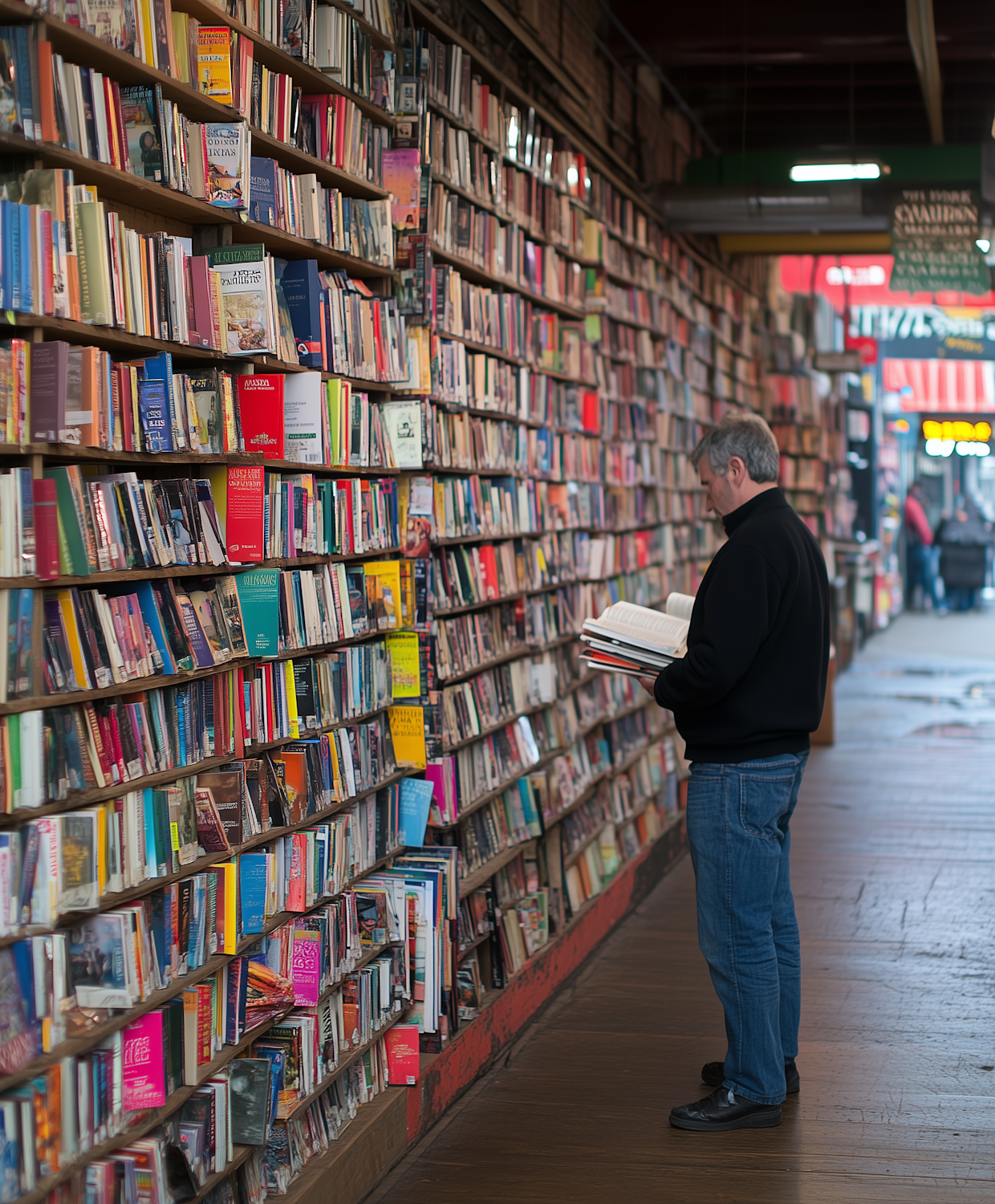
They help us think critically about the world we live in.
If you want more books that challenge and inspire, browse our curated recommendations. These are the stories that will open your mind.
Reader’s Guide: How to Approach Controversial SF
You have a list of some of the most challenged science fiction books ever written. Now what? Reading a controversial book is different from reading a comfortable one. These stories push back. They make you think. To get the most out of them, you need the right tools and mindset.
Start with critical reading strategies.
First, research the context of the book. When was it written? What was happening in the world? For example, 1984 was published in 1949, just after World War II and during the rise of Stalinism. That background gives the surveillance themes much more weight. The American Library Association offers great resources to help you understand why certain books were targeted. Check out the Banned Books Week resources for contextual guides.
Second, consider multiple interpretations. A book like A Clockwork Orange can be read as a warning against government control of individual freedom. But it can also be read as a critique of violent, directionless youth. Both readings are valid. The best conversations come from wrestling with different viewpoints.
Third, sit with your discomfort. If a scene upsets you, ask why. Is it the violence? The language? The idea being presented? That moment of unease is often where real learning happens.
Use discussion questions to go deeper.
If you are reading alone, journal your reactions. If you are in a book club, try these questions based on reflection prompts from librarians:
- What does this book say about power and who gets to hold it?
- Why do you think this book was challenged? Are those reasons fair?
- Does the author use uncomfortable scenes on purpose to make a point?
- How does this book relate to the world today? What has changed? What has stayed the same?
For more ideas, the Ultimate List of Book Club Discussion Questions is a fantastic resource for any genre.
Lean on trusted resources.
You do not have to figure this out alone. Libraries and educational groups provide excellent support. The Unite Against Book Bans project offers free discussion guides for commonly banned titles. Even authors like Frances Hodgson Burnett have works that have faced challenges, and their stories teach us how context changes over time.
Many banned books are also among the best historical novels of all time and some of the best-selling works ever published. That tells us something. The same books that get banned also get read. They get talked about. They get taught.
If you want to start a meaningful conversation about any of the books on our list, these strategies and resources will help you do it well. And if you enjoy books that challenge your perspective, you will love our full library of curated recommendations.
The Future of Banned SF: Trends, Activism, and Discovery
Here is the thing about censorship. It is not going away. In fact, book challenges are rising fast. According to the American Library Association, a staggering 4,235 unique titles were challenged in 2025, the second highest number ever recorded. That is a lot of books being questioned, pulled from shelves, or restricted. And science fiction is a frequent target. From Parable of the Sower by Octavia Butler to The Lord of the Rings, even the most beloved SF works get caught up in the fight.
Why does this matter for you as a reader? Because when a book gets challenged, it becomes harder for everyone to find it. That includes the very books that help us ask big questions about the future, technology, and what it means to be human.
So who is fighting back?
Groups like the American Library Association and PEN America are at the front line.
PEN America has tracked more than 10,000 book bans in schools during the 2023-2024 school year alone.
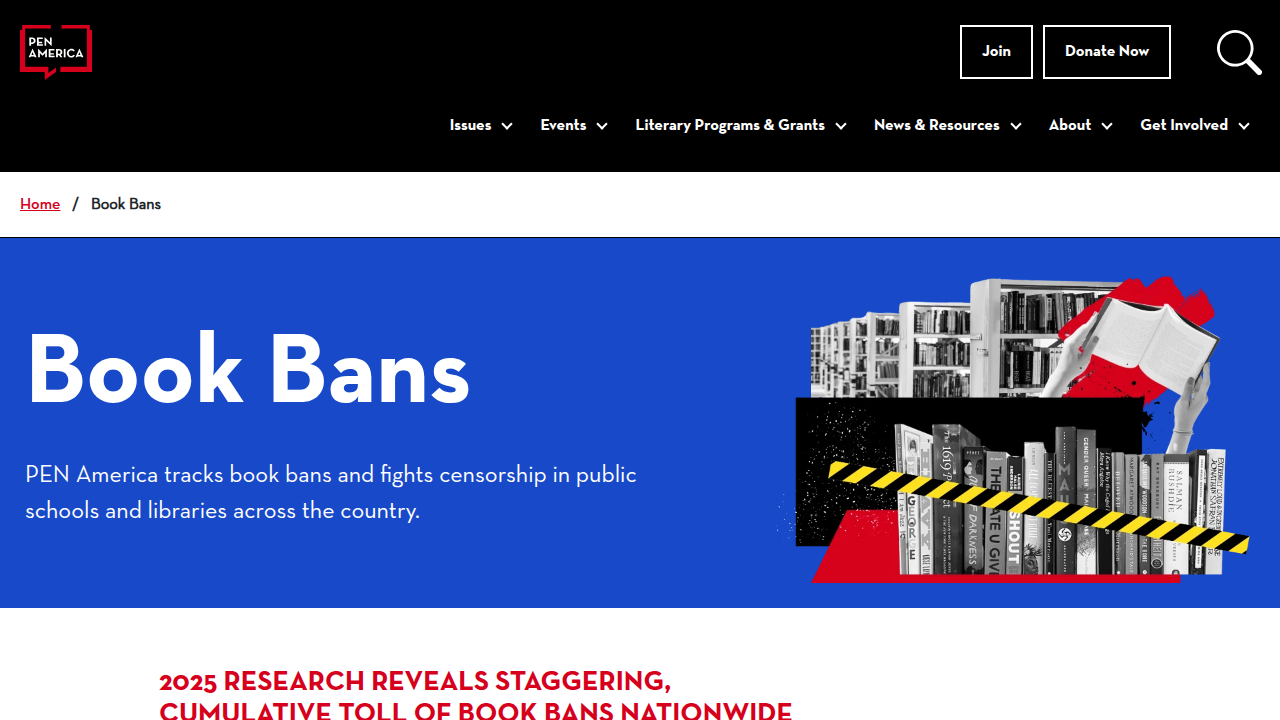
That number doubled from the year before. These organizations do not just track the problem. They create resources, support librarians, and push for policies that protect intellectual freedom.
Here is a quick look at the main players working to keep SF and other books accessible:
| Organization | What They Do | Where to Learn More |
|---|---|---|
| American Library Association (ALA) | Tracks challenges, offers data, supports libraries | ALA Banned Books Data |
| PEN America | Reports on school book bans, advocates for writers | PEN America Book Bans |
| Unite Against Book Bans | Provides discussion guides, grassroots activism | Unite Against Book Bans |
What can you actually do?
It is simpler than you think. The best way to support intellectual freedom is to engage with challenged books. Read them. Talk about them. Share them. When you pick up a banned SF novel, you send a message that these stories matter. You also get the benefit of reading some of the most thought provoking work ever written. Many banned books are also among the best historical novels of all time and best selling works ever published. That is no accident. The books that get challenged are often the ones that challenge us.
If you want to dig deeper into how censorship works over time, the PEN America timeline of literary censorship is a great place to start. And if you are curious about how an author like Frances Hodgson Burnett faced challenges in her own time, take a look at our article on the enduring appeal of Frances Hodgson Burnett books.
The future of banned SF is not just about fighting censorship. It is about discovering the books that make us think, question, and grow. And that starts with you.
Summary
This article explains why science fiction frequently appears on banned-and-challenged lists and what that history means for readers today. It traces censorship from early book burnings to modern school and library challenges, showing how SF’s habit of questioning authority, gender, technology, and religion makes it a particular target. The guide breaks down the controversial themes that spark removal—sexuality, violence, political critique, and religious subversion—and gives context for each. You’ll find a curated list of widely challenged SF titles, why they were targeted, and why they still matter. Practical reading advice covers context research, discussion questions, and how to sit with discomfort to learn more. The article also surveys current activism and data trends and suggests simple actions readers can take to defend access. After reading, you’ll be able to choose courageous books, discuss them thoughtfully, and support efforts to keep controversial works available.